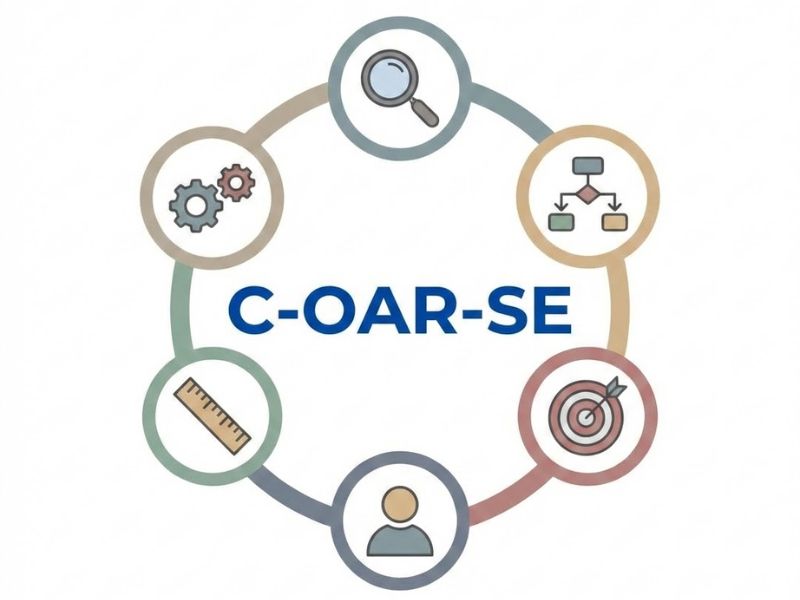
Quy trình C-OAR-SE là một phương pháp luận khoa học nghiêm ngặt được đề xuất bởi Giáo sư John R. Rossiter vào năm 2002, nhằm giải quyết những hạn chế cốt tử của các phương pháp phát triển thang đo truyền thống trong marketing. Bài viết này sẽ phân tích toàn văn công trình kinh điển “The C-OAR-SE procedure for scale development in marketing” đăng trên Tạp chí Quốc tế về Nghiên cứu Marketing (IJRM), cung cấp một khung tham chiếu chuẩn xác cho các nhà nghiên cứu.
1. Tổng Quan & Lý Thuyết Nền Tảng (Overview & Theoretical Foundations)
1.1 Thông tin định danh bài báo
- Tiêu đề gốc: The C-OAR-SE procedure for scale development in marketing.
- Tiêu đề tiếng Việt: Quy trình C-OAR-SE để phát triển thang đo trong Marketing.
- Tác giả: John R. Rossiter (Đại học Wollongong, Úc & Đại học Erasmus, Hà Lan).
- Tạp chí: International Journal of Research in Marketing, 19 (2002), 305-335.
1.2 Bối cảnh ra đời & Vấn đề nghiên cứu
Bài báo đề xuất quy trình C-OAR-SE, viết tắt của 6 bước: Construct definition (Định nghĩa khái niệm), Object classification (Phân loại đối tượng), Attribute classification (Phân loại thuộc tính), Rater identification (Xác định người đánh giá), Scale formation (Hình thành thang đo), và Enumeration (Tính toán).
Quy trình này ra đời để khắc phục sai lầm của phương pháp truyền thống (Churchill, 1979) vốn quá phụ thuộc vào hệ số Alpha và phân tích nhân tố, dẫn đến việc loại bỏ các biến quan trọng về mặt nội dung (như trong thang đo SERVQUAL) hoặc thêm các biến vô nghĩa chỉ để tăng độ tin cậy thống kê.

2. Khái Niệm Hóa và Cấu Trúc Khái Niệm (Construct Definition)
Theo lý thuyết C-OAR-SE, một khái niệm (construct) phải được định nghĩa tường minh dựa trên 3 thành phần cấu trúc O-A-R:
- Object (Đối tượng): Sự vật/hiện tượng tiêu điểm được đánh giá.
- Attribute (Thuộc tính): Chiều hướng đánh giá.
- Rater Entity (Thực thể đánh giá): Người thực hiện việc đánh giá.
Ví dụ: “Chất lượng dịch vụ” không phải là một khái niệm đầy đủ. Khái niệm đầy đủ phải là: “Chất lượng dịch vụ (Attribute) của IBM (Object) theo đánh giá của Khách hàng doanh nghiệp (Rater)”.
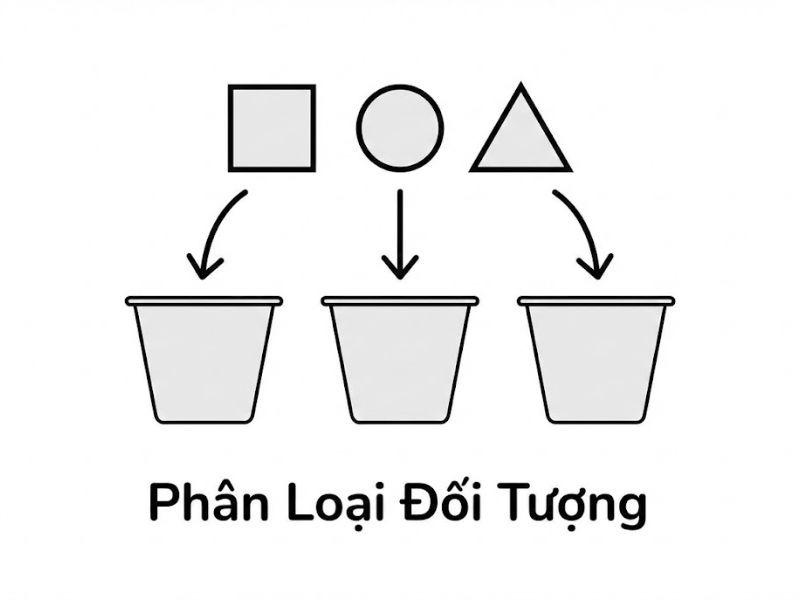
3. Phân Loại Đối Tượng (Object Classification)
Việc phân loại đối tượng quyết định số lượng mục hỏi cần thiết để đại diện cho nó:
3.1 Đối tượng Cụ thể Đơn nhất (Concrete Singular)
Đối tượng duy nhất, rõ ràng (Ví dụ: “IBM”, “Coca-Cola”).
- Hệ quả: Chỉ cần 1 mục hỏi (single-item) để mô tả đối tượng.
3.2 Đối tượng Trừu tượng Tập hợp (Abstract Collective)
Đối tượng là tập hợp các thành phần riêng biệt (Ví dụ: “Nước giải khát có ga” gồm Cola, Soda chanh…).
- Hệ quả: Cần nhiều mục hỏi để liệt kê hết các thành phần. Tạo thành chỉ số (Index).
3.3 Đối tượng Trừu tượng Được tạo thành (Abstract Formed)
Đối tượng có nhiều thành phần tạo nên ý nghĩa của nó (Ví dụ: “Chủ nghĩa tư bản” gồm Tự do kinh doanh, Lợi nhuận…).
- Hệ quả: Cần nhiều mục hỏi để định nghĩa đủ ý nghĩa. Tạo thành chỉ số (Index).

4. Phân Loại Thuộc Tính (Attribute Classification)
Đây là bước quan trọng nhất. Phân loại sai thuộc tính dẫn đến chọn sai mô hình đo lường.
4.1 Thuộc tính Cụ thể (Concrete Attribute)
Mọi người đều hiểu giống nhau (Ví dụ: Tuổi, Thu nhập, Ý định mua).
- Đo lường: Dùng 1 mục hỏi.
4.2 Thuộc tính Được tạo thành (Formed Attribute)
Các thành phần con cộng lại tạo nên ý nghĩa của thuộc tính (Ví dụ: Chất lượng dịch vụ, Giai cấp xã hội).
- Đo lường: Dùng Chỉ số (Index) tổng hợp các thành phần. Không dùng Alpha để loại biến.
4.3 Thuộc tính Khơi gợi (Eliciting Attribute)
Là đặc điểm tâm lý bên trong gây ra các biểu hiện bên ngoài (Ví dụ: Tính cách, Nhu cầu nhận thức).
- Đo lường: Dùng thang đo đa mục (Scale). Đây là trường hợp duy nhất dùng được Cronbach’s Alpha và Phân tích nhân tố.
5. Xác Định Người Đánh Giá (Rater Identification)
- Cá nhân (Individual): Tự đánh giá (Self-report).
- Chuyên gia (Experts): Nhóm nhỏ giám khảo có chuyên môn.
- Nhóm (Group): Mẫu người tiêu dùng/nhân viên đánh giá một đối tượng bên ngoài.
6. Hình Thành Thang Đo (Scale Formation)
Đây là bước thứ 5 trong quy trình (chữ S trong C-OAR-SE), hướng dẫn cách viết câu hỏi và chọn định dạng trả lời.
6.1 Kết hợp và Viết mục hỏi (Item Writing)
- Mục hỏi được tạo ra bằng cách ghép phần mô tả Đối tượng với phần mô tả Thuộc tính.
- Phải thực hiện phỏng vấn nhận thức (cognitive interviewing) trước khi chốt thang đo để đảm bảo người trả lời hiểu đúng nghĩa. Rossiter nhấn mạnh: Đừng dựa vào số liệu thống kê để sửa lỗi diễn đạt.
6.2 Định dạng câu trả lời (Response Formats)
Rossiter đưa ra quan điểm mạnh mẽ về việc cải cách định dạng trả lời:
- Hạn chế tối đa thang đo Likert (Đồng ý – Phản đối): Thang đo này gộp cả cường độ vào câu hỏi (stem), gây mơ hồ. Người trả lời khó phân biệt giữa “Rất đồng ý” với một câu phát biểu yếu và “Đồng ý” với một câu phát biểu mạnh.
- Sử dụng thang đo Mức độ (Intensity Scales): Nên đưa mức độ vào các lựa chọn trả lời (leaves).
- Ví dụ: Hoàn toàn không – Hơi hơi – Khá là – Cực kỳ.
- Hoặc thang tần suất: Không bao giờ – Thỉnh thoảng – Thường xuyên – Luôn luôn.
- Thang điểm số: Khuyến nghị dùng thang 0-10 hoặc 0-100 vì nó tự nhiên với tư duy con người hơn thang 1-7.
7. Tính Toán & Báo Cáo (Enumeration and Reporting)
Đây là bước cuối cùng (chữ E trong C-OAR-SE), quy định cách xử lý dữ liệu.
7.1 Quy tắc tính điểm (Scoring Rules)
Cách tính điểm phụ thuộc vào loại Đối tượng và Thuộc tính đã phân loại ở trên:
- Điểm đơn (Single Score): Dùng cho (Đối tượng Cụ thể) + (Thuộc tính Cụ thể).
- Chỉ số (Index Score): Dùng cho bất kỳ (Đối tượng Tập hợp/Được tạo thành) HOẶC (Thuộc tính Được tạo thành).
- Điểm số là Tổng (Sum) hoặc Trung bình cộng (Average) của các thành phần.
- Lưu ý quan trọng: Các thành phần trong chỉ số là không thể thay thế. Bạn không được loại bỏ bất kỳ mục nào dù tương quan thấp.
- Điểm Thang đo (Scale Score): Dùng cho (Thuộc tính Khơi gợi). Điểm là trung bình cộng các mục, sau khi đã kiểm tra tính đơn hướng.
7.2 Báo cáo kết quả (Reporting)
- Quy đổi chuẩn: Nên quy đổi mọi điểm số về thang 0-10 (hoặc -5 đến +5) để người đọc dễ hình dung.
- Khoảng tin cậy: Đối với đánh giá của Nhóm (Group Raters), phải báo cáo Điểm trung bình kèm theo Khoảng tin cậy (Confidence Interval) (ví dụ: 7.5 ± 0.3) để thể hiện độ chính xác của dữ liệu.

8. Giá Trị & Độ Tin Cậy (Validity & Reliability)
Rossiter dành phần lớn nội dung để tranh luận lại các quan niệm sai lầm về Giá trị và Độ tin cậy trong quy trình truyền thống.
8.1 Giá trị Nội dung (Content Validity) là duy nhất
- Trong C-OAR-SE, Giá trị nội dung là tiêu chuẩn tối thượng. Nó được xác lập bằng tư duy logic và sự đồng thuận của chuyên gia (Expert agreement) ngay từ khâu định nghĩa.
- Không cần (và không thể) kiểm định lại giá trị nội dung bằng thống kê.
8.2 Vô hiệu hóa Ma trận MTMM (Construct Validity)
- Rossiter bác bỏ việc dùng Ma trận Đa đặc điểm – Đa phương pháp (MTMM) để kiểm định thang đo C-OAR-SE.
- Lý do: Nếu thang đo C-OAR-SE (vốn đúng về mặt nội dung) không tương quan với các thang đo cũ (vốn kém chất lượng), điều đó không có nghĩa là C-OAR-SE sai. Ngược lại, nó chứng tỏ C-OAR-SE đang đo lường cái gì đó khác biệt và chính xác hơn.
8.3 Giá trị Dự báo (Predictive Validity)
- Mục tiêu không phải là tối đa hóa tương quan ($r$) bằng mọi giá.
- Mục tiêu là tìm ra tương quan thực tế (true population correlation). Việc thêm bớt biến để “kích” hệ số tương quan lên cao là hành vi sai lệch khoa học (biến khái niệm này thành khái niệm khác).
8.4 Độ Tin Cậy (Reliability) là Độ Chính Xác (Precision)
- Độ tin cậy không phải là đặc tính cố định của thang đo. Nó là độ chính xác của điểm số trong một lần đo cụ thể.
- Với Biến Được tạo thành (Formed Attribute): Độ tin cậy là 100% (giả sử người trả lời trung thực) vì các mục hỏi chính là định nghĩa của biến. Alpha không có ý nghĩa.
- Với Biến Khơi gợi (Eliciting Attribute): Dùng Alpha để ước tính độ chính xác. Alpha khoảng 0.7-0.8 là đủ; cao hơn mức này (ví dụ >0.9) thường ám chỉ sự trùng lặp (redundancy) của câu hỏi.
9. Hướng Dẫn Ứng Dụng Nghiên Cứu (Academic Implications)
Dành cho các nhà nghiên cứu và nghiên cứu sinh:
- Dũng cảm dùng thang đo đơn mục (Single-item): Nếu bạn đo lường “Ý định mua”, “Thái độ chung”, hay “Mức độ thích thú”, hãy dùng 1 câu hỏi duy nhất. Đừng bị áp lực phải tạo ra 3-4 câu hỏi lặp lại chỉ để làm hài lòng người phản biện theo trường phái cũ.
- Bảo vệ luận điểm về biến Formed: Khi nghiên cứu về “Chất lượng dịch vụ”, “Hình ảnh thương hiệu”, hay “Định hướng thị trường”, hãy trích dẫn Rossiter (2002) để khẳng định đây là biến Formed. Từ đó, từ chối việc chạy Alpha hay EFA để loại bỏ biến.
- Tối ưu hóa bảng câu hỏi: Sắp xếp ngẫu nhiên các câu hỏi để tránh hiệu ứng hào quang (halo effect) và thiên kiến phương pháp.
10. Ứng Dụng Quản Trị Doanh Nghiệp (Managerial Implications)
Dành cho các Marketer và Nhà quản trị:
- Thiết kế khảo sát thực tế hơn: Thay vì hỏi 5 câu mơ hồ kiểu Likert (“Tôi cảm thấy X tốt”, “X làm tôi hài lòng”), hãy hỏi thẳng 1 câu trên thang điểm 0-10: “Bạn đánh giá X bao nhiêu điểm?”. Khách hàng sẽ trả lời nhanh hơn và dữ liệu chính xác hơn.
- Đo lường cái cần đo: Tập trung vào các thành phần cụ thể (Formed components) của dịch vụ/sản phẩm để biết chính xác chỗ nào cần cải thiện, thay vì chỉ nhìn vào một điểm số Alpha vô hồn.
- Hiểu đúng về số liệu: Khi nhìn báo cáo, hãy đòi hỏi nhân viên cung cấp cả khoảng sai số (ví dụ: ±5%). Đừng tin tuyệt đối vào một con số trung bình đơn lẻ.
11. Các Câu Hỏi Thường Gặp (FAQ)
Tại sao quy trình C-OAR-SE lại phản đối việc sử dụng Cronbach’s Alpha cho mọi thang đo?
Trả lời: Cronbach’s Alpha đo lường mức độ tương quan giữa các biến quan sát. Nó chỉ có ý nghĩa với các “Biến khơi gợi” (Eliciting Attributes) nơi các biến quan sát là kết quả của một nguyên nhân tâm lý chung. Đối với “Biến cấu tạo” (Formed Attributes) như Chất lượng dịch vụ hay Kiến thức, các thành phần tạo nên khái niệm không nhất thiết phải tương quan (Ví dụ: Giỏi toán không có nghĩa là phải giỏi văn, nhưng cả hai đều tạo nên Kiến thức). Dùng Alpha ở đây sẽ dẫn đến việc loại bỏ sai lầm các thành phần quan trọng.
Làm sao để phân biệt Biến Cấu tạo (Formed) và Biến Khơi gợi (Eliciting)?
Trả lời: Hãy dùng phép thử tư duy: “Nếu thay đổi giá trị của biến quan sát, khái niệm mẹ có thay đổi không?” (Formed) hay “Nếu khái niệm mẹ thay đổi, các biến quan sát có thay đổi đồng loạt không?” (Eliciting). Ngoài ra, trong quy trình C-OAR-SE, nếu các thành phần “cộng gộp” lại để tạo thành ý nghĩa của khái niệm, đó là Formed. Nếu các thành phần là “biểu hiện” của khái niệm, đó là Eliciting.
Quy trình C-OAR-SE có chấp nhận thang đo Likert không?
Trả lời: Rossiter (2002) khuyến nghị hạn chế tối đa thang đo Likert (Rất đồng ý – Rất không đồng ý) vì người trả lời thường nhầm lẫn giữa “mức độ đồng ý” và “mức độ của tính chất”. Ông đề xuất sử dụng thang đo có nhãn cụ thể cho từng mức độ (Ví dụ: Hoàn toàn không < Hơi hơi < Khá là < Cực kỳ) để tăng độ chính xác.
12. Tài Liệu Tham Khảo (References)
Dưới đây là danh sách đầy đủ toàn bộ 122 tài liệu tham khảo từ bài báo gốc, trình bày chuẩn APA:
- Ajzen, I. (2001). Nature and operation of attitudes. Annual Review of Psychology, 52, 27–58.
- Anderson, E., Chu, W., & Weitz, B. (1987). Industrial purchasing: an empirical exploration of the buyclass framework. Journal of Marketing, 51(3), 71–86.
- Andrews, F. M. (1984). Construct validity and error components of survey measures. Public Opinion Quarterly, 48(2), 409–442.
- Arndt, J., & Crane, E. (1975). Response bias, yea-saying, and the double negative. Journal of Marketing Research, 12(2), 218–220.
- Arrindell, W. A., & van der Ende, J. (1985). An empirical test of the utility of the observations-to-variables ratio in factor and components analysis. Applied Psychological Measurement, 9(2), 165–178.
- Baddeley, A. (1994). The magical number seven: still magic after all these years? Psychological Review, 101(2), 353–356.
- Bagozzi, R. P. (1994). Structural equation models in marketing research: basic principles. In R. P. Bagozzi (Ed.), Principles of marketing research (pp. 317–385). Cambridge, MA: Blackwell.
- Bagozzi, R. P., & Burnkrant, R. E. (1979). Attitude organization and the attitude-behavior relationship. Journal of Personality and Social Psychology, 37(6), 913–919.
- Bass, B. M., Cascio, W. F., & O’Connor, E. J. (1974). Magnitude estimations of expressions of frequency and amount. Journal of Applied Psychology, 59(3), 313–320.
- Baumgartner, H., & Steenkamp, J.-B. E. M. (2001). Response styles in marketing research: a cross-national investigation. Journal of Marketing Research, 38(2), 143–156.
- Bearden, W. O., Netemeyer, R. G., & Mobley, M. F. (1993). Handbook of marketing scales: multi-item measures for marketing and consumer behavior research. Newbury Park, CA: Sage.
- Bettman, J. R. (1970). Information processing models of consumer behavior. Journal of Marketing Research, 7(3), 370–376.
- Blalock, H. M. (1964). Causal inferences in nonexperimental research. Chapel Hill, NC: University of North Carolina Press.
- Bodur, H. O., Brinberg, D., & Coupey, E. (2000). Belief, affect and attitude: alternative models of the determinants of attitude. Journal of Consumer Psychology, 9(1), 17–28.
- Bollen, K., & Lennox, R. (1991). Conventional wisdom on measurement: a structural equation perspective. Psychological Bulletin, 110(2), 305–314.
- Bolton, R. N. (1993). Pretesting questionnaires: content analyses of respondents’ concurrent verbal protocols. Marketing Science, 12(3), 280–303.
- Breckler, S. J., & Wiggins, E. C. (1989). Affect versus evaluation in the structure of attitudes. Journal of Experimental Social Psychology, 25(3), 253–271.
- Burisch, M. (1997). Test length and validity revisited. European Journal of Personality, 11(4), 303–315.
- Cacioppo, J. T., & Petty, R. E. (1982). The need for cognition. Journal of Personality and Social Psychology, 42(1), 116–131.
- Cacioppo, J. T., Petty, R. E., & Kao, C. F. (1984). The efficient assessment of need for cognition. Journal of Personality Assessment, 48(3), 306–307.
- Calder, B. J., & Ross, M. (1973). Attitudes and behavior. Morristown, NJ: General Learning Press.
- Chan, A. M. (2001). Unpublished research for doctoral dissertation. Sydney, Australia: Australian Graduate School of Management, University of New South Wales.
- Childers, T. L., Houston, M. J., & Heckler, S. (1985). Measurement of individual differences in visual versus verbal information processing. Journal of Consumer Research, 12(2), 125–134.
- Churchill Jr., G. A. (1979). A paradigm for developing better measures of marketing constructs. Journal of Marketing Research, 16(1), 64–73.
- Cliff, N. (1959). Adverbs as multipliers. Psychological Review, 66(1), 27–44.
- Cohen, B. (1987). Some observations on rating scales. Marketing Review, 42(4), 25–27.
- Cohen, J. (1977). Statistical power analysis for the behavioral sciences (Revised ed.). New York: Academic Press.
- Cohen, P., Cohen, J., Teresi, J., Marchi, M., & Velez, C. N. (1990). The problems in the measurement of latent variables in structural equations causal models. Applied Psychological Measurement, 14(2), 183–196.
- Coleman, R. P. (1983). The continuing significance of social class to marketing. Journal of Consumer Research, 10(3), 265–280.
- Cook, T. D., & Campbell, D. T. (1979). Quasi-experimentation: design and analysis issues for field settings. Chicago: Rand McNally.
- Cortina, J. M. (1993). What is coefficient alpha? An examination of theory and applications. Journal of Applied Psychology, 78(1), 98–104.
- Cronbach, L. J. (1951). Coefficient alpha and the internal structure of tests. Psychometrika, 16(3), 297–334.
- Cronbach, L. J., Gleser, G. C., Nanda, H., & Rajaratnam, N. (1972). The dependability of behavioral measurements: theory of generalizability for scores and profiles. New York: Wiley.
- Deshpandé, R., & Zaltman, G. (1984). A comparison of factors affecting researcher and manager perceptions of market research use. Journal of Marketing Research, 21(1), 32–38.
- Diamantopoulos, A., & Winklhofer, H. M. (2001). Index construction with formative indicators: an alternative to scale development. Journal of Marketing Research, 38(2), 269–277.
- Domzal, T. J., & Kernan, J. B. (1993). Variations on the pursuit of beauty: toward a corporal theory of the body. Psychology and Marketing, 10(6), 496–511.
- Drolet, A., & Morrison, D. (2001). Do we really need multiple-item measures in service research? Journal of Service Research, 3(3), 196–204.
- Dunlap, W. P. (1994). Generalizing the common language effect size indicator to bivariate normal correlations. Psychological Bulletin, 116(3), 509–511.
- Edwards, J. R., & Bagozzi, R. P. (2000). On the nature and direction of relationships between constructs and measures. Psychological Methods, 5(2), 155–174.
- Edwards, K. (1990). The interplay of affect and cognition in attitude formation and change. Journal of Personality and Social Psychology, 59(2), 202–216.
- Feldman, J. M., & Lynch Jr., J. G. (1988). Self-generated validity and other effects of validity on belief, attitude, intention, and behavior. Journal of Applied Psychology, 73(3), 421–435.
- Finn, A., & Kayandé, U. (1997). Reliability assessment and optimization of marketing measurement. Journal of Marketing Research, 34(2), 262–275.
- Fishbein, M., & Ajzen, I. (1975). Belief, attitude, intention, and behavior. Reading, MA: Addison-Wesley.
- Foddy, W. (1993). Constructing questions for interviews and questionnaires: theory and practice in social research. Cambridge, UK: Cambridge Univ. Press.
- Fornell, C., & Bookstein, F. L. (1982). Two structural equation models: LISREL and PLS applied to consumer exit-voice theory. Journal of Marketing Research, 19(4), 440–452.
- Fornell, C., & Cha, J. (1994). Partial least squares. In R. P. Bagozzi (Ed.), Principles of marketing research (pp. 52–78). Cambridge, MA: Blackwell.
- Gardner, D. G., Cummings, L. L., Dunham, R. B., & Pierce, J. L. (1998). Single-item versus multiple-item measurement scales: an empirical comparison. Educational and Psychological Measurement, 58(6), 898–915.
- Grichting, W. L. (1994). The meaning of “I don’t know” in opinion surveys: indifference versus ignorance. Australian Psychologist, 29(1), 71–75.
- Heise, D. R. (1969). Some methodological issues in semantic differential research. Psychological Bulletin, 72(6), 406–422.
- John, G., & Roedder, D. L. (1981). Reliability assessment: coefficients alpha and beta. In K. Bernhardt, & W. J. Kehoe (Eds.), The changing marketing environment: new theories and applications (pp. 354–357). Chicago: American Marketing Association.
- Kahle, L. R. (1983). Social values and social change: adaptation to life in America. New York: Praeger.
- Kenny, D. A. (1979). Correlation and causality. New York: Wiley.
- King, C. W., & Summers, J. O. (1970). Overlap of opinion leaders across product categories. Journal of Marketing Research, 7(1), 43–50.
- Kohli, A. K., Jaworski, B. J., & Kumar, A. (1993). MARKOR: a measure of market orientation. Journal of Marketing Research, 30(4), 467–477.
- Kraus, S. J. (1995). Attitudes and the prediction of behavior: a meta-analysis of the empirical literature. Personality and Social Psychology Bulletin, 21(1), 59–75.
- Law, K. S., & Wong, C. S. (1999). Multidimensional constructs in structural equation analysis: an illustration using the job perception and job satisfaction constructs. Journal of Management, 25(2), 143–154.
- Law, K. S., Wong, C. S., & Mobley, W. H. (1998). Toward a taxonomy of multidimensional constructs. Academy of Management Review, 23(4), 741–755.
- Lewis, R. M. (1977). The conscious interlude. Kingsport, TN: Kingsport Press.
- Lodish, L. M., Abraham, M., Kalmenson, S., Livelsberger, J., Lubetkin, B., Richardson, B., & Stevens, M. E. (1995). How advertising works: a meta-analysis of 389 real world split cable TV advertising experiments. Journal of Marketing Research, 32(2), 125–139.
- Lumsden, J. (1957). A factorial approach to unidimensionality. Australian Journal of Psychology, 9(2), 105–111.
- Lumsden, J. (1961). The construction of unidimensional tests. Psychological Bulletin, 58(2), 122–131.
- Lumsden, J. (1976). Test theory. Annual Review of Psychology, 27, 251–280.
- Lumsden, J. (1978). Tests are perfectly reliable. British Journal of Mathematical and Statistical Psychology, 31(1), 19–26.
- Lumsden, J., & Ross, J. (1973). Validity as theoretical equivalence. Australian Journal of Psychology, 25(3), 191–197.
- McGuire, W. J. (1989). The structure of individual attitudes and attitude systems. In A. R. Pratkanis, S. J. Breckler, & A. G. Greenwald (Eds.), Attitude structure and function (pp. 37–68). Hillsdale, NJ: Erlbaum.
- Medin, D. L., Lynch, E. B., & Solomon, K. O. (2000). Are there kinds of concepts? Annual Review of Psychology, 51, 121–147.
- Mehrabian, A., & Russell, J. (1974). An approach to environmental psychology. Cambridge, MA: MIT Press.
- Meyer, G. J., Finn, S. E., Eyde, L. D., Kay, G. G., Moreland, K. L., Dies, R. R., Eisman, E. J., Kubiszyn, T. W., & Reed, G. M. (2001). Psychological testing and psychological assessment: a review of evidence and issues. American Psychologist, 56(2), 128–165.
- Michaels, R. E., & Day, R. L. (1985). Measuring customer orientation of salespeople: a replication with industrial buyers. Journal of Marketing Research, 22(4), 443–446.
- Millar, M. G., & Millar, K. U. (1990). Attitude change as a function of attitude type and argument type. Journal of Personality and Social Psychology, 59(2), 217–228.
- Miller, G. A. (1956). The magical number seven, plus or minus two: some limits on our capacity for processing information. Psychological Review, 63(1), 81–97.
- Mitchell, A. (1983). The nine American lifestyles: who we are and where we’re going. New York: Macmillan.
- Mittal, B., & Lassar, W. M. (1996). The role of personalization in service encounters. Journal of Retailing, 72(1), 95–109.
- Mowen, J. C. (2000). The 3M model of motivation and personality: theory and empirical applications to consumer behavior. Norwell, MA: Kluwer Academic Publishing.
- Narver, J. C., & Slater, S. F. (1990). The effect of market orientation on business profitability. Journal of Marketing, 54(4), 20–35.
- Novak, T. P., Hoffman, D. L., & Yung, Y.-F. (2000). Capturing the customer experience in online environments: a structural modeling approach. Marketing Science, 19(1), 22–42.
- Nunnally, J. C. (1978). Psychometric theory (2nd ed.). New York: McGraw-Hill.
- O’Grady, K. E. (1982). Measures of explained variance: cautions and limitations. Psychological Bulletin, 92(3), 766–777.
- Osgood, C. E., Suci, G., & Tannenbaum, P. H. (1957). The measurement of meaning. Urbana, IL: University of Illinois Press.
- Ozer, D. J. (1985). Quantitative methods in psychology: correlation and the coefficient of determination. Psychological Bulletin, 97(2), 307–315.
- Parasuraman, A., Zeithaml, V. A., & Berry, L. L. (1988). SERVQUAL: a multiple-item scale for measuring consumer perceptions of service quality. Journal of Retailing, 64(1), 12–40.
- Parnes, S. J. (1961). Effects of extended effort in creative problem solving. Journal of Educational Psychology, 52(3), 117–122.
- Paunonen, S. V. (1984). Optimizing the validity of personality assessments: the importance of aggregation and item content. Journal of Research in Personality, 18(4), 411–431.
- Peterson, R. A. (1994). A meta-analysis of Cronbach’s coefficient alpha. Journal of Consumer Research, 21(2), 381–391.
- Peterson, R. A. (1997). A quantitative analysis of rating-scale response variability. Marketing Letters, 8(1), 9–21.
- Rentz, J. O. (1987). Generalizability theory: a comprehensive method for assessing and improving the dependability of marketing measures. Journal of Marketing Research, 24(1), 19–28.
- Revelle, W. (1979). Hierarchical clustering and the internal structure of tests. Multivariate Behavioral Research, 14(1), 57–74.
- Rogers, R. W. (1975). A protection motivation theory of fear appeals and attitude change. Journal of Psychology, 91(5), 93–114.
- Rogers, R. W. (1983). Cognitive and physiological processes in fear appeals and attitude change: a revised theory of protection motivation. In J. Cacioppo, & R. E. Petty (Eds.), Social psychophysiology (pp. 153–176). New York: Guilford.
- Rokeach, M. (1973). The nature of human values. New York: Free Press.
- Rossiter, J. R. (1981). Predicting starch scores. Journal of Advertising Research, 21(5), 63–68.
- Rossiter, J. R., & Eagleson, G. (1994). Conclusions from the ARF’s copy research validity project. Journal of Advertising Research, 34(3), 19–32.
- Rossiter, J. R., & Percy, L. (1987). Advertising and promotion management. New York: McGraw-Hill.
- Rossiter, J. R., & Percy, L. (1997). Advertising communications and promotion management (2nd ed.). New York: McGraw-Hill.
- Rust, R. T., & Cooil, B. (1994). Reliability measures for qualitative data: theory and implications. Journal of Marketing Research, 31(1), 1–14.
- Saxe, R., & Weitz, B. A. (1982). The SOCO scale: a measure of the customer orientation of salespeople. Journal of Marketing Research, 19(3), 343–351.
- Schaffer, J. (2001). Causes as probability raisers of processes. The Journal of Philosophy, 98(2), 75–92.
- Schlinger, M. J. (1979). A profile of responses to commercials. Journal of Advertising Research, 19(2), 37–46.
- Schwarz, N. (1999). Self-reports: how questions shape the answers. American Psychologist, 54(2), 93–105.
- Sherrard, M. (2001). Personal communication. February 21.
- Sigauw, G. B., Brown, G., & Widing II, R. E. (1994). The influence of the market orientation of the firm on sales force behavior and attitudes. Journal of Marketing Research, 31(1), 106–116.
- Slater, S. F., & Narver, J. C. (1994). Does competitive environment moderate the market orientation-performance relationship? Journal of Marketing, 58(1), 46–55.
- Smith, A. M. (1999). Some problems when adopting Churchill’s paradigm for the development of service quality measurement scales. Journal of Business Research, 46(2), 109–120.
- Spearman, C. (1904). General intelligence objectively determined and measured. American Journal of Psychology, 15, 201–293.
- SPSS (1988). SPSS-X user’s guide (3rd ed.). Chicago, IL: SPSS.
- Steenkamp, J.-B. E. M., & Baumgartner, H. (1995). Development and cross-cultural validation of a short form of CSI as a measure of optimum stimulation level. International Journal of Research in Marketing, 12(2), 97–104.
- Steenkamp, J.-B. E. M., & van Trijp, H. C. M. (1991). The use of LISREL in validating marketing constructs. International Journal of Research in Marketing, 8(4), 283–299.
- Steiger, J. H., & Ward, L. M. (1987). Factor analysis and the coefficient of determination. Psychological Bulletin, 101(3), 471–474.
- Steinman, C., Deshpandé, R., & Farley, J. U. (2000). Beyond marketing orientation: when customers and suppliers disagree. Journal of the Academy of Marketing Science, 28(1), 109–119.
- Taylor, S. A., & Baker, T. L. (1994). An assessment of the relationship between service quality and customer satisfaction in the formation of consumers’ purchase intentions. Journal of Retailing, 70(2), 163–178.
- Urban, G. L., & Hauser, J. R. (1993). Design and marketing of new products (2nd ed.). Englewood Cliffs, NJ: Prentice Hall.
- Voss, K. E., Stem Jr., D. E., & Fotopoulos, S. (2000). A comment on the relationship between coefficient alpha and scale characteristics. Marketing Letters, 11(2), 177–191.
- Wallsten, T. S., Budescu, D. V., & Zwick, R. (1993). Comparing the calibration and coherence of numerical and verbal probability judgments. Management Science, 39(2), 176–190.
- Webb, D. J., Green, C. L., & Brashear, T. G. (2000). Development and validation of scales to measure attitudes influencing monetary donations to charitable organizations. Journal of the Academy of Marketing Science, 28(2), 299–309.
- Weiss, D. J., & Davison, M. L. (1981). Test theory and methods. Annual Review of Psychology, 32, 629–658.
- Wells, G. L., & Windschitl, P. D. (1999). Stimulus sampling and social psychological experimentation. Personality and Social Psychology Bulletin, 25(9), 1115–1125.
- Wierenga, B., & van Bruggen, G. (2000). Marketing management support systems: principles, tools and implementation. Boston, MA: Kluwer Academic Publishing.
- Windschitl, P. D., & Wells, G. L. (1996). Measuring psychological uncertainty: verbal versus numeric methods. Journal of Experimental Psychology: Applied, 2(4), 343–364.
- Witte, K. (1994). Fear control and danger control: a test of the extended parallel process model (EPPM). Communication Monographs, 61(2), 113–134.
- Woodside, A. G., & Fleck Jr., R. A. (1979). The case approach to understanding brand choice. Journal of Advertising Research, 19(2), 23–30.
- Zaichkowsky, J. L. (1994). The personal involvement inventory: reduction, revision, and application to advertising. Journal of Advertising, 23(4), 59–70.
- Zaltman, G., LeMasters, K., & Heffring, M. (1982). Theory construction in marketing—some thoughts on thinking. New York: Wiley.
Để tiếp cận nguyên bản các mô hình và biểu đồ phân loại chi tiết của tác giả, bạn có thể tải file PDF bài báo gốc tại đây:

Giảng viên Nguyễn Thanh Phương là chuyên gia chuyên sâu về Nghiên cứu khoa học, Ứng dụng AI, Digital Marketing và Quản trị bản thân. Với kinh nghiệm giảng dạy thực chiến, tác giả trực tiếp hướng dẫn ứng dụng phương pháp luận và phân tích dữ liệu chuyên sâu cho người học nên được sinh viên gọi là Thầy giáo quốc dân. Mọi nội dung chia sẻ đều tuân thủ nguyên tắc khách quan, thực chứng và mang giá trị ứng dụng cao, hướng tới mục tiêu cốt lõi: “Làm bạn tốt hơn!