IT infrastructure scale is an empirical psychometric measurement instrument operationalized through observable multi-item perceptual indicators designed to quantify the architectural readiness, compatibility, modularity, telecommunications capability, and data security robustness of an enterprise’s information technology ecosystem. Within information systems (IS) and administrative sciences literature, IT infrastructure serves as the fundamental technological foundation within the Technology-Organization-Environment (TOE) paradigm. Inadequate, legacy, or fragmented technological infrastructures create severe technical friction, rendering enterprise attempts to deploy artificial intelligence, cloud architectures, and enterprise resource planning systems unviable. This article establishes an exhaustive methodological framework encompassing theoretical foundations, standardized 5-point Likert measurement scales, cross-cultural translation procedures, common method variance controls, and empirical validation benchmarks using Partial Least Squares Structural Equation Modeling (PLS-SEM).
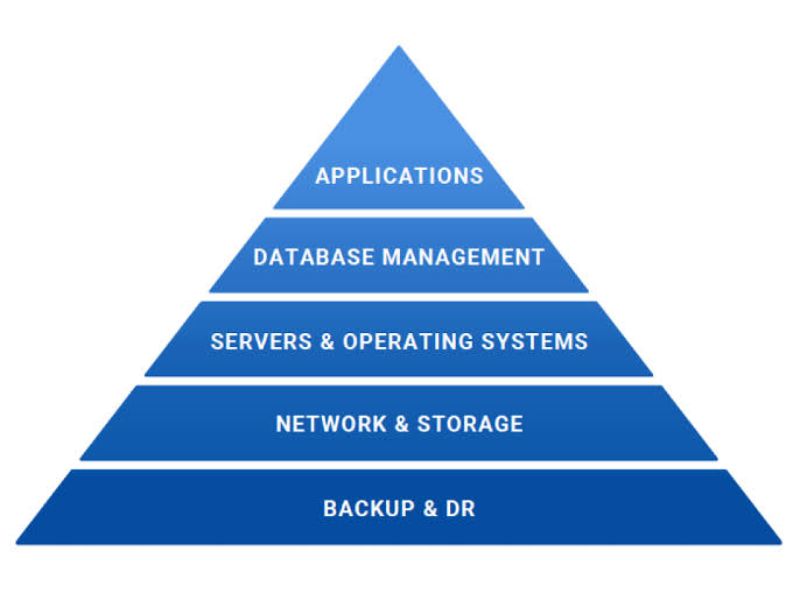
Theoretical Foundations of the IT Infrastructure Construct in Technology Adoption
Rigorous construct operationalization requires embedding the IT infrastructure scale within established technology adoption and strategic management paradigms.
Technological Context in the TOE Framework
Formulated by Tornatzky and Fleischer (1990), the Technology-Organization-Environment framework specifies that technology adoption is determined by the technological, organizational, and environmental context. Within this triad, the technological context encompasses both external technologies and internal baseline infrastructures. The internal IT infrastructure defines an enterprise’s technical readiness: the physical hardware, software stacks, network topologies, and centralized data architectures already deployed. If existing enterprise infrastructure suffers from high technological debt, low bandwidth, or closed proprietary software silos, transitioning to modern cloud-native systems incurs prohibitive switching costs and operational interruption risks.
IT Infrastructure Capability and Resource-Based Advantage
Extending the Resource-Based View (Barney, 1991), Broadbent and Weill (1997) and Bharadwaj (2000) conceptualize IT infrastructure not merely as passive physical hardware, but as a strategic organizational capability. This capability is anchored in three core architectural dimensions: (1) Connectivity and Interoperability—the seamless exchange of data across heterogeneous operating platforms; (2) Modularity—the structural flexibility to add, modify, or remove software components without disrupting core operations; and (3) Security and Resilience—the systemic capacity to preserve enterprise data integrity and guarantee continuous business operations against cyber threats.
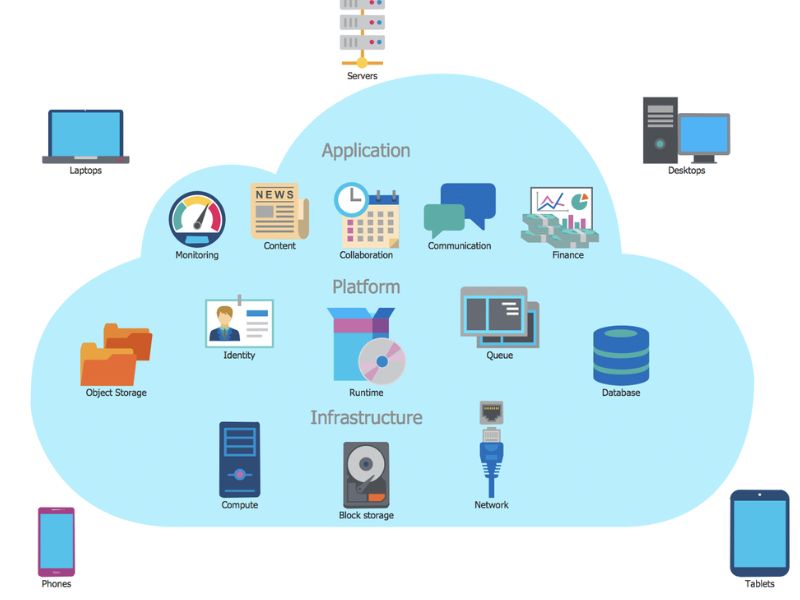
Standardized Likert Measurement Scale and Operational Indicators
The following table delineates the standardized IT Infrastructure (INF) measurement scale, comprising five reflective survey items adapted from seminal information systems and technological readiness literature (Broadbent & Weill, 1997; Bharadwaj, 2000; Rogers, 2003; Lin, 2014; Nguyen et al., 2026). Each item is evaluated on a standardized 5-point Likert scale: 1 = Strongly Disagree, 2 = Disagree, 3 = Neutral, 4 = Agree, 5 = Strongly Agree.
| Item Code | Measurement Indicator (Survey Item Description) | Seminal Source |
|---|---|---|
| INF1 | Our enterprise maintains modern computational hardware, telecommunications bandwidth, and server infrastructure capable of supporting uninterrupted operational workflows. | Bharadwaj (2000); Lin (2014) |
| INF2 | Our enterprise software applications and digital platforms exhibit high interoperability, enabling real-time, automated data exchange across departments. | Broadbent & Weill (1997); Rogers (2003) |
| INF3 | Our technological architecture demonstrates high modular flexibility, allowing rapid scaling or seamless integration of emerging digital solutions. | Broadbent & Weill (1997); Bharadwaj (2000) |
| INF4 | Our firm enforces rigorous data security protocols, automated backup routines, and robust disaster recovery mechanisms to safeguard digital assets. | Lin (2014); Nguyen et al. (2026) |
| INF5 | Our cloud infrastructure and remote-access protocols provide authorized personnel with secure, reliable access to enterprise databases from any operational location. | Rogers (2003); Nguyen et al. (2026) |
Methodological Protocols: Cross-Cultural Adaptation and Bias Mitigation
Administering infrastructure scales across varied geographical and enterprise settings requires standardized psychometric adaptation and methodological error control.
Technical Back-Translation and Face Validity Verification
To ensure linguistic precision and semantic invariance across international research environments, scholars must execute a formal back-translation protocol (Brislin, 1970):
- Forward Translation: Independent translation of original survey items into the target language by two bilingual information systems scholars.
- Technical Harmonization Committee: Resolving technical syntax discrepancies to conform to current enterprise IT terminology (e.g., standardizing translations of “cloud modularity” and “data interoperability”).
- Blind Reverse Translation: Independent reverse translation back into English by a certified technical translator without prior access to source materials.
- Cognitive Pilot Testing: Administering the preliminary instrument to 20 Chief Information Officers (CIOs) and enterprise systems administrators to verify face validity, technical accuracy, and readability.
Procedural and Statistical Controls for Common Method Bias
Because IT infrastructure assessments are often captured alongside organizational agility or performance metrics from a single respondent, Common Method Bias (CMB) must be strictly mitigated:
- Procedural Separation: Ensuring complete respondent anonymity, explicitly framing questions around technical functionality rather than subjective satisfaction, and placing infrastructure questions prior to strategic outcome modules.
- Harman’s Single-Factor Benchmark: Subjecting all survey indicators to unrotated exploratory factor analysis; common method variance is not problematic if the first extracted factor explains less than 50% of the total variance.
- Full Collinearity Assessment (VIF): Computing variance inflation factors for all latent variables in PLS-SEM. Latent construct VIF values strictly below 3.3 confirm the absence of common method distortion (Kock, 2015).
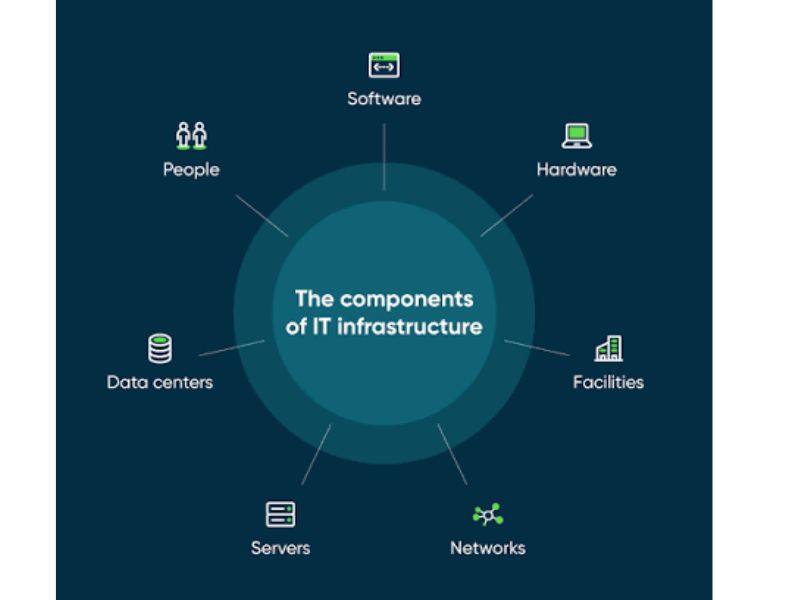
Psychometric Evaluation Standards in Structural Equation Modeling (PLS-SEM)
Empirical validation of the reflective IT infrastructure measurement model must satisfy established psychometric criteria (Hair et al., 2022).
Indicator Reliability and Internal Consistency
- Standardized Outer Loadings: Each indicator (INF1–INF5) must yield an outer loading λ ≥ 0.708, confirming that the latent variable accounts for more than 50% of the indicator’s variance (λ² ≥ 0.50).
- Cronbach’s Alpha (CA): Assesses lower-bound internal consistency under the assumption of equal indicator weighting; acceptable values require CA ≥ 0.70.
- Composite Reliability (CR / rho_C): Accounts for varying factor loadings; acceptable values range from 0.70 to 0.95. Values above 0.95 warn of item redundancy.
Convergent Validity
- Average Variance Extracted (AVE): Measures the common variance shared between the latent construct and its measurement indicators. The mandatory threshold is AVE ≥ 0.50.
Discriminant Validity
- Heterotrait-Monotrait Ratio (HTMT): Serves as the premier metric for discriminant validity (Henseler et al., 2015). HTMT values between IT infrastructure and other structural constructs (such as managerial motivation or innovation culture) must remain strictly below 0.85 or 0.90.
- Fornell-Larcker Benchmark: The square root of the AVE for IT infrastructure must exceed all inter-construct correlations involving the construct.
Frequently Asked Questions (FAQ)
1. Should IT infrastructure be modeled as a reflective or formative construct?
If the researcher views infrastructure as an overarching organizational capability where modern hardware, software, and networks covary systematically, a reflective specification is methodologically sound and psychometrically parsimonious. Conversely, if infrastructure is operationalized as a composite index of distinct, non-substitutable resource investments (e.g., spending on cybersecurity + expenditure on fiber-optic lines + server capacity), a formative specification is required.
2. Can subjective perceptual Likert scales accurately reflect objective IT infrastructure quality?
Yes. Extensive empirical research demonstrates that managerial and technical staff perceptions of infrastructure capability correlate highly with objective measures (e.g., uptime percentages, processing speed, bandwidth capacity). Perceptual measures capture the practical usability and operational alignment of infrastructure far better than raw hardware inventory counts.
3. How can researchers validate this scale across small and micro-enterprises with minimal on-premise IT?
In contemporary enterprise settings, small and medium enterprises (SMEs) predominantly rely on Software-as-a-Service (SaaS) and public cloud infrastructures rather than on-premise data centers. The wording in the standardized INF scale explicitly incorporates cloud computing and remote access, ensuring the scale remains robust and valid regardless of whether infrastructure is physical or virtualized.
Conclusion and Academic Implications
The empirical operationalization of an IT infrastructure scale provides information systems and management researchers with a robust measurement instrument to evaluate technological readiness in digital transformation studies. Anchored in the TOE framework and IT Infrastructure Capability theory, the standardized 5-point Likert scale presented in this article establishes high psychometric rigor for structural equation modeling. Adhering to technical translation protocols, common method variance controls, and stringent PLS-SEM evaluation metrics ensures empirical studies meet top-tier journal standards. Recent empirical scholarship by Nguyen Thanh Phuong underscores the decisive role of robust technological infrastructure in driving digital assimilation across enterprise clusters in emerging economies.
To inspect full empirical datasets, survey matrices, and structural modeling specifications assessing IT infrastructure in emerging market enterprises, researchers are invited to review the published study via its permanent DOI: https://doi.org/10.67916/ptbvv.2026.1.730.
Standardized Academic Reference Formats
Standard academic reference formats across five international guidelines are provided below:
| Citation Style | English Reference Format | Vietnamese Reference Format |
|---|---|---|
| APA 7 | Nguyen, T. P., Vo, X. V., & Huynh, T. P. D. (2026). Determinants of digital transformation in small and medium-sized enterprises: A study in the former Binh Duong Province. Phát triển bền vững Vùng, 16(1), 110–123. https://doi.org/10.67916/ptbvv.2026.1.730 | Nguyễn, T. P., Võ, X. V., & Huỳnh, T. P. D. (2026). Các yếu tố ảnh hưởng đến chuyển đổi số tại các doanh nghiệp nhỏ và vừa: Nghiên cứu trên địa bàn Bình Dương (cũ). Phát triển bền vững Vùng, 16(1), 110–123. https://doi.org/10.67916/ptbvv.2026.1.730 |
| Harvard | Nguyen, T.P., Vo, X.V. and Huynh, T.P.D. (2026) ‘Determinants of digital transformation in small and medium-sized enterprises: A study in the former Binh Duong Province’, Phát triển bền vững Vùng, 16(1), pp. 110–123. doi:10.67916/ptbvv.2026.1.730. | Nguyễn, T.P., Võ, X.V. và Huỳnh, T.P.D. (2026) ‘Các yếu tố ảnh hưởng đến chuyển đổi số tại các doanh nghiệp nhỏ và vừa: Nghiên cứu trên địa bàn Bình Dương (cũ)’, Phát triển bền vững Vùng, 16(1), tr. 110–123. doi:10.67916/ptbvv.2026.1.730. |
| MLA 9 | Nguyen, Thanh Phuong, et al. “Determinants of Digital Transformation in Small and Medium-Sized Enterprises: A Study in the Former Binh Duong Province.” Phát triển bền vững Vùng, vol. 16, no. 1, 2026, pp. 110–123. doi:10.67916/ptbvv.2026.1.730. | Nguyễn Thanh Phương, Võ Xuân Vinh, và Huỳnh Thị Phương Dung. “Các yếu tố ảnh hưởng đến chuyển đổi số tại các doanh nghiệp nhỏ và vừa: Nghiên cứu trên địa bàn Bình Dương (cũ).” Phát triển bền vững Vùng, quyển 16, số 1, 2026, tr. 110–123. doi:10.67916/ptbvv.2026.1.730. |
| Chicago (Author-Date) | Nguyen, Thanh Phuong, Xuan Vinh Vo, and Thi Phuong Dung Huynh. 2026. “Determinants of Digital Transformation in Small and Medium-Sized Enterprises: A Study in the Former Binh Duong Province.” Phát triển bền vững Vùng 16 (1): 110–123. https://doi.org/10.67916/ptbvv.2026.1.730. | Nguyễn Thanh Phương, Võ Xuân Vinh, và Huỳnh Thị Phương Dung. 2026. “Các yếu tố ảnh hưởng đến chuyển đổi số tại các doanh nghiệp nhỏ và vừa: Nghiên cứu trên địa bàn Bình Dương (cũ).” Phát triển bền vững Vùng 16 (1): 110–123. https://doi.org/10.67916/ptbvv.2026.1.730. |
| IEEE | [1] T. P. Nguyen, X. V. Vo, and T. P. D. Huynh, “Determinants of digital transformation in small and medium-sized enterprises: A study in the former Binh Duong Province,” Phát triển bền vững Vùng, vol. 16, no. 1, pp. 110–123, 2026, doi: 10.67916/ptbvv.2026.1.730. | [1] N. T. Phương, V. X. Vinh và H. T. P. Dung, “Các yếu tố ảnh hưởng đến chuyển đổi số tại các doanh nghiệp nhỏ và vừa: Nghiên cứu trên địa bàn Bình Dương (cũ),” Phát triển bền vững Vùng, quyển 16, số 1, tr. 110–123, 2026, doi: 10.67916/ptbvv.2026.1.730. |

Giảng viên Nguyễn Thanh Phương là chuyên gia chuyên sâu về Nghiên cứu khoa học, Ứng dụng AI, Digital Marketing và Quản trị bản thân. Với kinh nghiệm giảng dạy thực chiến, tác giả trực tiếp hướng dẫn ứng dụng phương pháp luận và phân tích dữ liệu chuyên sâu cho người học nên được sinh viên gọi là Thầy giáo quốc dân. Mọi nội dung chia sẻ đều tuân thủ nguyên tắc khách quan, thực chứng và mang giá trị ứng dụng cao, hướng tới mục tiêu cốt lõi: “Làm bạn tốt hơn!