Nghiên cứu về năng lực AI và đổi mới tổ chức (AI capability and organizational innovation) tập trung giải thích cách doanh nghiệp huy động hạ tầng dữ liệu, kỹ năng nhân sự và văn hóa số để sáng tạo sản phẩm mới, tái thiết kế quy trình vận hành và chuyển đổi mô hình kinh doanh. Thay vì chỉ đóng vai trò tự động hóa nhằm cắt giảm chi phí tác nghiệp, năng lực trí tuệ nhân tạo ở cấp độ tổ chức làm thay đổi căn bản cách doanh nghiệp phát hiện nhu cầu thị trường, thử nghiệm ý tưởng mới và tái định hình chuỗi giá trị. Trong các công trình thực nghiệm quốc tế, tác động của năng lực AI lên đổi mới tổ chức được lý giải thông qua các cơ chế năng lực động như đổi mới thuận hai tay (innovation ambidexterity), linh hoạt chiến lược và dịch vụ hóa (servitization).
Cơ sở lý thuyết kết nối Năng lực AI với Đổi mới tổ chức
Trong nghiên cứu nền tảng về hệ thống thông tin, Mikalef và Gupta (2021) đã chứng minh rằng năng lực trí tuệ nhân tạo—được hợp thành từ nguồn lực công nghệ hữu hình, kỹ năng con người và tài sản vô hình—tác động trực tiếp đến sức sáng tạo của tổ chức (organizational creativity). Khi đặt trong hệ quy chiếu Lý thuyết Năng lực động (Dynamic Capabilities Theory; Teece, 2007), kết quả tổng hợp 35 nghiên cứu thực nghiệm từ Scopus và Web of Science của Nguyen, T. P., Tran, D. K., & Nguyen, T. H. H. (2026) chỉ ra rằng nhóm biến kết quả về đổi mới sáng tạo, chuyển đổi số và dịch vụ hóa xuất hiện trong 17/35 nghiên cứu, đứng thứ hai chỉ sau nhóm hiệu quả hoạt động chung của doanh nghiệp (21/35 nghiên cứu).
Dưới góc nhìn vi mô, năng lực AI và đổi mới tổ chức gắn kết chặt chẽ qua ba tiến trình: (1) công cụ phân tích dự báo giúp doanh nghiệp nhận diện (sensing) sớm các khoảng trống thị trường và xu hướng tiêu dùng xanh (Camargo, Morales, Nascimento, & Tortorella, 2025); (2) thuật toán mô phỏng và AI tạo sinh giúp nắm bắt (seizing) cơ hội thông qua rút ngắn chu kỳ nghiên cứu – phát triển sản phẩm mới (Li, Xu, Zhang, Liu, & Li, 2025; Al-Khatib, Al-Fadhel, & Khattab, 2026); và (3) hệ thống điều phối nguồn lực giúp tái cấu trúc (reconfiguring) mô hình kinh doanh truyền thống sang mô hình kinh doanh số và tuần hoàn (Abou-Foul, Ruiz-Alba, & López-Tenorio, 2023; Duong, 2026).

Cơ chế 1: Năng lực AI thúc đẩy Đổi mới thuận hai tay (Innovation Ambidexterity)
Dựa trên Lý thuyết Thuận hai tay (Ambidexterity Theory), một dòng nghiên cứu thực nghiệm lớn chứng minh rằng năng lực AI là chìa khóa giúp doanh nghiệp giải quyết bài toán đánh đổi giữa đổi mới khai thác (exploitative innovation) và đổi mới khai phá (exploratory innovation) (Ahmad, 2025; Al-Khatib et al., 2026; Duong, 2026; Kumar, Kumar, Chaudhuri, Chatterjee, & Vrontis, 2025). Một mặt, các thuật toán học máy tối ưu hóa dây chuyền hiện hữu, giảm tỷ lệ lỗi và nâng cao hiệu suất khai thác. Mặt khác, khả năng phân tích dữ liệu lớn và AI tạo sinh mở ra không gian thử nghiệm các ý tưởng sản phẩm đột phá và đổi mới xanh thuận hai tay (green ambidexterity innovation).
Cơ chế 2: Chuyển đổi mô hình kinh doanh số và Đổi mới mở (Open Innovation)
Trong bối cảnh các doanh nghiệp nhỏ và vừa (SMEs) cùng các doanh nghiệp công nghệ tại các nền kinh tế mới nổi, mối quan hệ giữa năng lực AI và đổi mới tổ chức thể hiện rõ qua sự chuyển đổi mô hình kinh doanh (business model transformation) và đổi mới mở (Le, Vu, Phan, & Dao, 2026; T. L. Le, 2026; Liu & Xie, 2026). Nghiên cứu thực nghiệm tại Việt Nam của A. D. Le et al. (2026) và T. L. Le (2026) cho thấy năng lực AI và AI xanh gia tăng tính linh hoạt chiến lược (strategic flexibility), giúp doanh nghiệp tái cấu trúc phương thức tạo giá trị và thúc đẩy đổi mới mở để thích ứng với biến động công nghệ.
Cơ chế 3: Dịch vụ hóa công nghiệp (Servitization) và Đổi mới dịch vụ B2B
Đối với các doanh nghiệp sản xuất chế tạo và dịch vụ B2B, năng lực AI đóng vai trò động lực thúc đẩy quá trình dịch vụ hóa (servitization)—tức bước chuyển từ việc chỉ bán sản phẩm vật lý sang cung cấp giải pháp tích hợp sản phẩm – dịch vụ thông minh, bảo trì dự báo và tư vấn dựa trên dữ liệu (Abou-Foul et al., 2023; Li et al., 2025). Đặc biệt, việc ứng dụng năng lực AI tạo sinh (generative AI capabilities) giúp doanh nghiệp B2B cá nhân hóa giải pháp dịch vụ số theo từng khách hàng doanh nghiệp.
| Cơ chế Đổi mới Tổ chức | Các Biến trung gian Trọng tâm trong Mô hình SEM | Các Biến điều tiết (Boundary Conditions) | Nghiên cứu Thực nghiệm Tiêu biểu (Nguyen et al., 2026) |
|---|---|---|---|
| Đổi mới thuận hai tay & Đổi mới đột phá | Đổi mới khai phá & khai thác (Innovation ambidexterity), Đổi mới xanh thuận hai tay, Năng lực thay đổi tổ chức | Sự phù hợp chiến lược (Strategic fit), Ý định khởi nghiệp số, Quản trị tri thức xanh | Ahmad (2025); Al Halbusi et al. (2025); Al-Khatib et al. (2026); Duong (2026) |
| Chuyển đổi mô hình kinh doanh & Đổi mới mở | Linh hoạt chiến lược (Strategic flexibility), Đổi mới mở (Open innovation), Tầm nhìn doanh nghiệp (Corporate foresight) | Biến động công nghệ (Technological turbulence), Chất lượng khởi nghiệp, Môi trường chính sách | Camargo et al. (2025); A. D. Le et al. (2026); T. L. Le (2026); Liu & Xie (2026) |
| Dịch vụ hóa (Servitization) & Đổi mới dịch vụ số | Đổi mới dịch vụ số (Digital service innovation), Điều phối nguồn lực, Tích hợp tri thức | Năng lực hấp thụ (Absorptive capacity), Độ bất định môi trường (Environmental dynamism) | Abou-Foul et al. (2023); Li et al. (2025) |
Thiết kế mô hình nghiên cứu về Năng lực AI và Đổi mới tổ chức
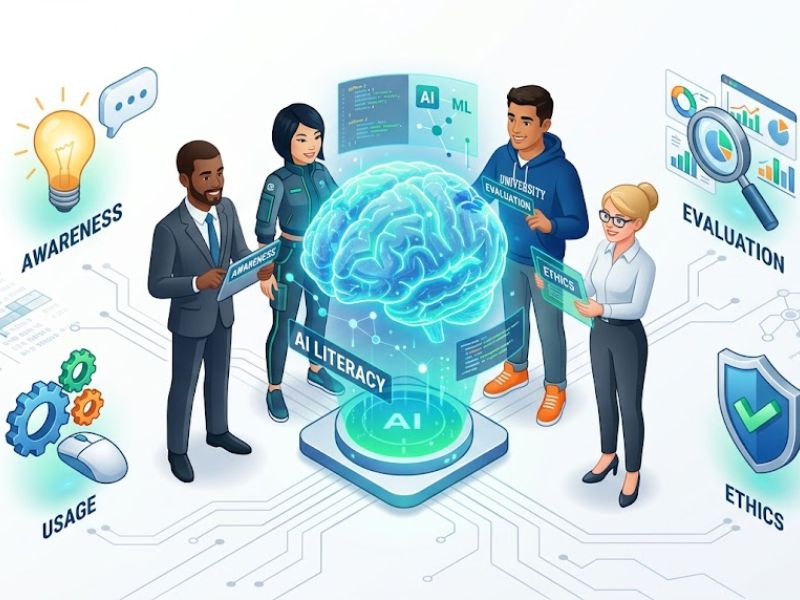
Khi xây dựng đề cương nghiên cứu mới về năng lực AI và đổi mới tổ chức, các nghiên cứu sinh và học viên cao học nên lưu ý tích hợp các biến trung gian năng lực động (như sự nhạy bén, linh hoạt chiến lược, đổi mới thuận hai tay) cùng các biến điều tiết nội bộ và ngoại cảnh (như năng lực hấp thụ, văn hóa dữ liệu, biến động công nghệ). Toàn bộ phân tích tổng hợp 17 công trình về đổi mới tổ chức nằm trong bộ dữ liệu 35 nghiên cứu thực nghiệm của bài báo năng lực trí tuệ nhân tạo và đổi mới tổ chức dưới góc độ lý thuyết năng lực động: Nguyen, T. P., Tran, D. K., & Nguyen, T. H. H. (2026). AI capability in dynamic capabilities: A systematic literature review using the TCCM framework. In Proceedings of the International Conference on Business Sustainability (ICBS 2026) (pp. 357–370). Information and Communications Publishing House.
Tài liệu tham khảo (Chuẩn APA 7th)
Abou-Foul, M., Ruiz-Alba, J. L., & López-Tenorio, P. J. (2023). The impact of artificial intelligence capabilities on servitization: The moderating role of absorptive capacity—A dynamic capabilities perspective. Journal of Business Research, 157, 113609. https://doi.org/10.1016/j.jbusres.2022.113609
Ahmad, Z. (2025). Unlocking AI capabilities: Exploring strategic fit, innovation ambidexterity, and digital entrepreneurial intent in driving digital transformation. Journal of Management Development, 44(2), 194–218. https://doi.org/10.1108/JMD-06-2024-0197
Al Halbusi, H., Popa, S., Soto-Acosta, P., & Abdelallag, M. (2025). The nexus of managerial and technical AI knowledge, disruptive innovation and the circular economy: The role of organizational change capability and financial resilience. Technology in Society, 82, 102937. https://doi.org/10.1016/j.techsoc.2025.102937
Al-Khatib, A. W., Al-Fadhel, H. A., & Khattab, M. (2026). How can generative artificial intelligence improve digital supply chain performance in manufacturing firms? Analyzing the mediating role of innovation ambidexterity using hybrid analysis through CB-SEM and PLS-SEM. Knowledge Management Research & Practice, 24(1), 1–16.
AlQershi, N., Ramayah, T., Alzuraiki, M., & Emam, A. S. M. (2026). Artificial intelligence and strategic resilience in international business: A new theory of multinational adaptation to geopolitical shocks. Review of International Business and Strategy, 36(1), 1–27. https://doi.org/10.1108/RIBS-03-2025-0061
Barney, J. (1991). Firm resources and sustained competitive advantage. Journal of Management, 17(1), 99–120.
Bibi, M., Tan, T. G., & Yau, H. (2025). Exploring the impact of AI capabilities on employee well-being: A mediated moderation analysis. SAGE Open, 15(3), 21582440251365692. https://doi.org/10.1177/21582440251365692
Camargo, G. F., Morales, V. M., Nascimento, D. L., & Tortorella, G. L. (2025). Exploring the role of corporate foresight in the coordination between dynamic capabilities and artificial intelligence in green innovation: A multi-continent comparison. IEEE Transactions on Engineering Management, 72, 1–14. https://doi.org/10.1109/TEM.2025.3533456
Chen, R., & Li, Z. (2026). Empirical analysis of the roles of dynamic sustainable capabilities and artificial intelligence in accelerating circular economy-driven innovation: Insights from Chinese manufacturing firms. Technological Forecasting and Social Change, 224, 124489. https://doi.org/10.1016/j.techfore.2025.124489
Chen, X., Li, Y., Tang, G., Li, W., & Guo, Z. (2026). Exploring how artificial intelligence capabilities impact corporate sustainability performance: Insights from Chinese manufacturing firms. Technovation, 151, 103428. https://doi.org/10.1016/j.technovation.2025.103428
Chowdhury, S., Ren, S., & Dey, P. K. (2026). AI assimilation for sustainable and resilient supply chains: Role of green ambidexterity and cybersecurity awareness. Technovation, 153, 103562. https://doi.org/10.1016/j.technovation.2026.103562
Dubey, R., Gunasekaran, A., Childe, S. J., Bryde, D. J., Giannakis, M., Foropon, C., & Hazen, B. T. (2020). Big data analytics and artificial intelligence pathway to operational performance under the effects of entrepreneurial orientation and environmental dynamism: A study of manufacturing organisations. International Journal of Production Economics, 226, 107599. https://doi.org/10.1016/j.ijpe.2019.107599
Duong, C. D. (2026). The green transition journey: How digital platforms and AI capabilities drive green ambidexterity innovation, circular economy, and sustainable performance. World Development Sustainability, 8, 100268. https://doi.org/10.1016/j.wds.2025.100268
Fosso Wamba, S., Queiroz, M. M., Pappas, I. O., & Sullivan, Y. (2024). Artificial intelligence capability and firm performance: A sustainable development perspective by the mediating role of data-driven culture. Information Systems Frontiers, 26(6), 2315–2330. https://doi.org/10.1007/s10796-023-10456-3
Hart, S. L. (1995). A natural-resource-based view of the firm. Academy of Management Review, 20(4), 986–1014.
Javed, M., Švecová, L., Danko, L., & Tučková, Z. (2026). Harnessing artificial intelligence and employee resilience for enhanced business performance: A resource-based and dynamic capabilities perspective. Human Behavior and Emerging Technologies, 2026, 1701205. https://doi.org/10.1155/hbet/1701205
Kugeza, G. (2026). AI-augmented decision-making and sustainability performance in SMEs: A hybrid PLS-SEM, ANN, and multi-group analysis. Business Strategy and the Environment, 35(2), 812–829.
Kumar, S., Kumar, V., Chaudhuri, R., Chatterjee, S., & Vrontis, D. (2025). AI capability and environmental sustainability performance: Moderating role of green knowledge management. Technology in Society, 81, 102878. https://doi.org/10.1016/j.techsoc.2025.102878
Le, A. D., Vu, N. T., Phan, T. T. H., & Dao, V. T. (2026). AI-enabled business model transformation and entrepreneurial quality: The moderating effect of technological turbulence. Technology in Society, 85, 103062. https://doi.org/10.1016/j.techsoc.2025.103062
Le, T. L. (2026). Green AI, strategic flexibility, and open innovation: Advancing circular economy and sustainable performance in SMEs. Journal of Open Innovation: Technology, Market, and Complexity, 12(1), 100452.
Lee, K., Lee, S., & Kim, S. (2026). AI for decision-making: Exploring the linkage from AI capability to firm performance. Aslib Journal of Information Management, 78(3), 512–534. https://doi.org/10.1108/AJIM-04-2025-0241
Li, L., Xu, C., Zhang, Q., Liu, Y., & Li, Q. (2025). Leveraging generative AI capabilities for competitive advantage in B2B service firms: A moderated mediation analysis of environmental dynamism and digital service innovation. Industrial Marketing Management, 124, 112–126.
Lu, J., Fan, L., Troise, C., & Bresciani, S. (2026). Exploring the nexus between artificial intelligence capability, multidimensional intellectual capital, and organizational agility of SMEs. Journal of Innovation & Knowledge, 11(2), 100697. https://doi.org/10.1016/j.jik.2026.100697
Mikalef, P., & Gupta, M. (2021). Artificial intelligence capability: Conceptualization, measurement calibration, and empirical study on its impact on organizational creativity and firm performance. Information & Management, 58(3), 103434. https://doi.org/10.1016/j.im.2021.103434
Moher, D., Liberati, A., Tetzlaff, J., & Altman, D. G. (2009). Preferred reporting items for systematic reviews and meta-analyses: The PRISMA statement. BMJ, 339, b2535. https://doi.org/10.1136/bmj.b2535
Nguyen, T. P., Tran, D. K., & Nguyen, T. H. H. (2026). AI capability in dynamic capabilities: A systematic literature review using the TCCM framework. In Proceedings of the International Conference on Business Sustainability (ICBS 2026) (pp. 357–370). Information and Communications Publishing House. https://www.researchgate.net/publication/416933536_AI_CAPABILITY_IN_DYNAMIC_CAPABILITIES_A_SYSTEMATIC_LITERATURE_REVIEW_USING_THE_TCCM_FRAMEWORK
Paul, J., & Rosado-Serrano, A. (2019). Gradual internationalization vs born-global/international new venture models: A review and research agenda. International Marketing Review, 36(6), 830–858. https://doi.org/10.1108/IMR-10-2018-0280
Ratanacharooenchai, C., & Jantapoon, K. (2026). The mediating role of supply chain resilience in the relationship between AI capabilities and sustainability performance: Evidence from manufacturing SMEs. Sustainable Futures, 11, 101789. https://doi.org/10.1016/j.sftr.2026.101789
Teece, D. J. (2007). Explicating dynamic capabilities: The nature and microfoundations of (sustainable) enterprise performance. Strategic Management Journal, 28(13), 1319–1350. https://doi.org/10.1002/smj.640
Zahoor, N., Usman, M., Khalil, S., Alwehabie, A., & Yasin, N. (2025). Green strategic intent, artificial intelligence capability, and behavioral dynamics of achieving circular economy goals in the public sector. Technological Forecasting and Social Change, 215, 124062. https://doi.org/10.1016/j.techfore.2025.124062

Giảng viên Nguyễn Thanh Phương là chuyên gia chuyên sâu về Nghiên cứu khoa học, Ứng dụng AI, Digital Marketing và Quản trị bản thân. Với kinh nghiệm giảng dạy thực chiến, tác giả trực tiếp hướng dẫn ứng dụng phương pháp luận và phân tích dữ liệu chuyên sâu cho người học nên được sinh viên gọi là Thầy giáo quốc dân. Mọi nội dung chia sẻ đều tuân thủ nguyên tắc khách quan, thực chứng và mang giá trị ứng dụng cao, hướng tới mục tiêu cốt lõi: “Làm bạn tốt hơn!