Research on AI capability and organizational innovation investigates how enterprises orchestrate artificial intelligence infrastructure, human expertise, and data-driven cultures to generate novel products, services, processes, and business models. Rather than acting merely as a cost-saving automation tool, firm-level AI capability reshapes how organizations identify market opportunities, experiment with digital solutions, and reconfigure value propositions. Across contemporary strategic management and innovation literature, scholars demonstrate that AI capability drives innovation through specific dynamic mechanisms most notably innovation ambidexterity, absorptive capacity, strategic flexibility, and business model transformation.
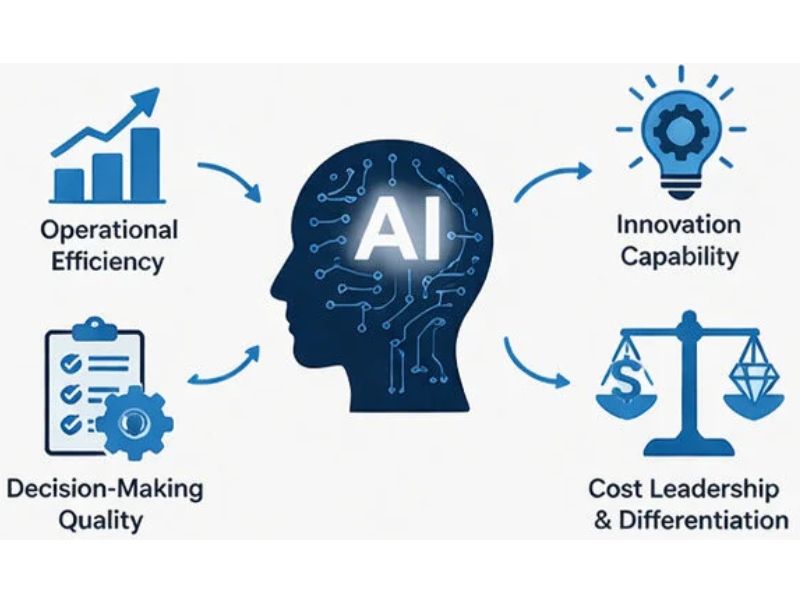
I. Conceptualizing the Link Between AI Capability and Innovation
In foundational information systems scholarship, Mikalef and Gupta (2021) established that artificial intelligence capability—comprising tangible data and computing infrastructure, technical and managerial human skills, and intangible organizational resources—directly fosters organizational creativity and firm performance. Extending this foundation into the dynamic capabilities domain (Teece, 2007), empirical studies synthesized by Nguyen, T. P., Tran, D. K., & Nguyen, T. H. H. (2026) show that innovation, digital transformation, and servitization outcomes represent the second largest outcome cluster in the literature, appearing in 17 of the 35 core empirical studies.
From a theoretical perspective, AI capability and organizational innovation are connected through three microfoundations. First, predictive and descriptive AI analytics strengthen sensing by uncovering latent customer needs, market gaps, and emerging technological trends (Camargo, Morales, Nascimento, & Tortorella, 2025). Second, prescriptive and generative AI tools accelerate seizing by compressing product design cycles, simulating R&D scenarios, and enabling rapid digital service prototyping (Li, Xu, Zhang, Liu, & Li, 2025; Al-Khatib, Al-Fadhel, & Khattab, 2026). Third, AI-enabled resource orchestration supports reconfiguring by transforming legacy manufacturing workflows into agile, service-oriented, and circular business models (Abou-Foul, Ruiz-Alba, & López-Tenorio, 2023; Duong, 2026).
II. Three Primary Innovation Pathways in Empirical Research
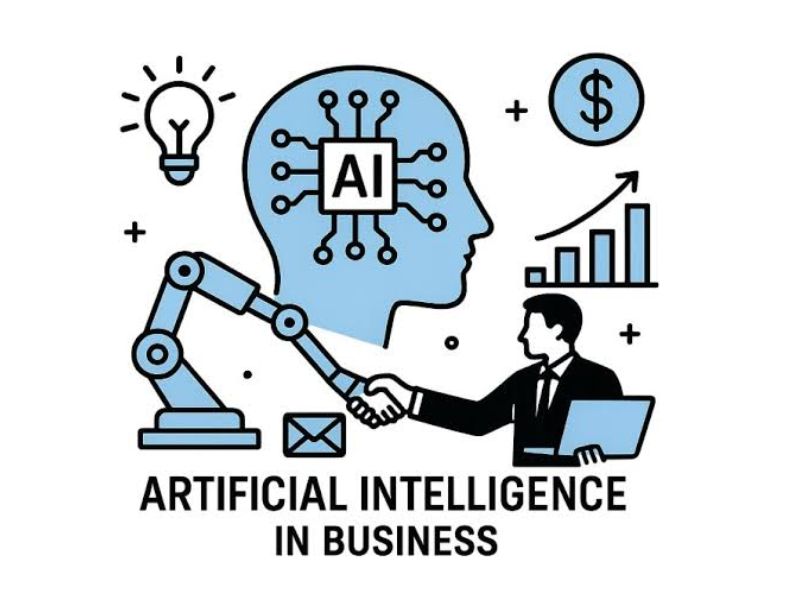
A synthesis of the 17 innovation-focused empirical studies in Nguyen et al. (2026) reveals that scholars model the impact of AI capability and organizational innovation along three distinct pathways:
Pathway 1: Innovation Ambidexterity (Balancing Exploration and Exploitation)
Grounded in Organizational Ambidexterity Theory, several empirical studies demonstrate that AI capability enables firms to resolve the tension between exploitative innovation (refining existing products and operational efficiency) and exploratory innovation (developing radical new digital or green offerings) (Ahmad, 2025; Al-Khatib et al., 2026; Duong, 2026). By automating routine analytical tasks while simultaneously generating novel insights from unstructured data, AI capability empowers firms to pursue dual innovation strategies without exhausting managerial attention.
Pathway 2: Business Model Transformation and Digital Product Innovation
A second stream examines how AI capability initiates structural business model innovation and digital product development (Le, Vu, Phan, & Dao, 2026; Liu & Xie, 2026; T. L. Le, 2026). In small and medium-sized enterprises (SMEs) and high-tech firms, AI capability enhances strategic flexibility and open innovation, allowing entrepreneurs and executives to redesign revenue models, customize digital products, and adapt value delivery channels in response to technological turbulence.
Pathway 3: Industrial Servitization and B2B Digital Service Innovation
In manufacturing and B2B contexts, AI capability serves as a primary driver of servitization—the shift from selling standalone physical products to delivering integrated product-service systems, predictive maintenance, and data-driven customer solutions (Abou-Foul et al., 2023; Li et al., 2025). Generative AI capabilities further accelerate B2B digital service innovation by enabling customized client interactions and automated knowledge co-creation.
| Innovation Pathway | Key Mediating Mechanisms | Moderating / Boundary Conditions | Representative Empirical Studies in Nguyen et al. (2026) |
|---|---|---|---|
| Innovation Ambidexterity & Disruptive Innovation | Exploratory and exploitative innovation, green ambidexterity, organizational change capability | Strategic fit, digital entrepreneurial intent, green knowledge management | Ahmad (2025); Al Halbusi et al. (2025); Al-Khatib et al. (2026); Duong (2026) |
| Business Model Transformation & Open Innovation | Strategic flexibility, open innovation, corporate foresight, adaptive capability | Technological turbulence, entrepreneurial quality, leadership and policy environment | Camargo et al. (2025); A. D. Le et al. (2026); T. L. Le (2026); Liu & Xie (2026) |
| Digital Servitization & B2B Service Innovation | Digital service innovation, resource orchestration, knowledge integration | Absorptive capacity, environmental dynamism, technology turbulence | Abou-Foul et al. (2023); Li et al. (2025) |
III. Mediating and Moderating Conditions Shaping AI-Driven Innovation
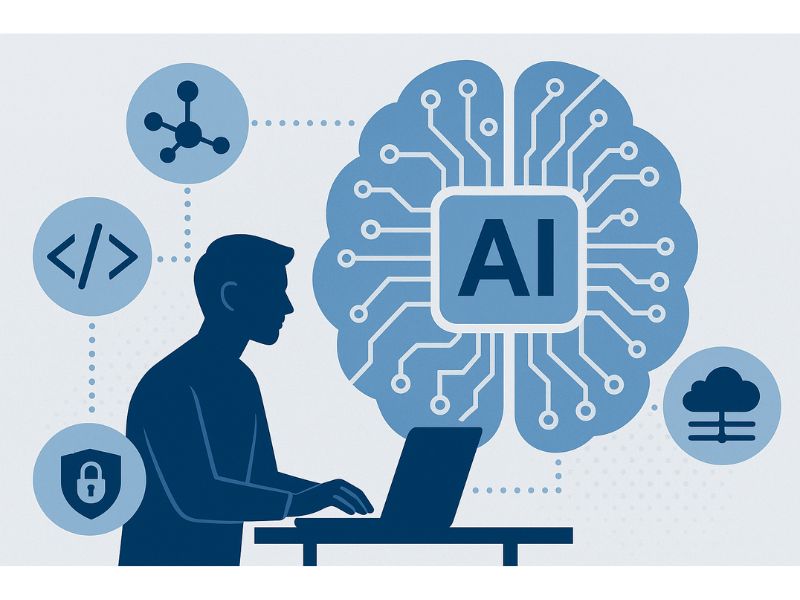
Empirical models consistently show that the relationship between AI capability and organizational innovation is contingent upon internal absorptive capacity and external environmental dynamism. Specifically, Abou-Foul et al. (2023) demonstrate that absorptive capacity positively moderates the effect of AI capabilities on servitization in US and European manufacturing firms, as organizations must be able to assimilate external knowledge to design viable service offerings. Similarly, A. D. Le et al. (2026) and Li et al. (2025) show that technological turbulence and environmental dynamism condition how effectively AI capability and generative AI capabilities translate into business model transformation and digital service innovation.
IV. Empirical Synthesis and Citation Source for Innovation Scholars
When designing new studies on AI capability and organizational innovation, researchers have substantial opportunities to move beyond cross-sectional manufacturing surveys by investigating generative AI-driven service innovation in healthcare, finance, hospitality, and public sector organizations using longitudinal or hybrid PLS-SEM and fsQCA designs. A comprehensive breakdown of the 17 innovation-focused studies—within a broader synthesis of 35 core empirical articles extracted from 179 Scopus and Web of Science records—is available in Nguyen, T. P., Tran, D. K., & Nguyen, T. H. H. (2026) – AI capability in dynamic capabilities: A systematic literature review using the TCCM framework, published in Proceedings of the International Conference on Business Sustainability (ICBS 2026) (pp. 357–370), Information and Communications Publishing House.
V. References (APA 7th Edition)
Abou-Foul, M., Ruiz-Alba, J. L., & López-Tenorio, P. J. (2023). The impact of artificial intelligence capabilities on servitization: The moderating role of absorptive capacity—A dynamic capabilities perspective. Journal of Business Research, 157, 113609. https://doi.org/10.1016/j.jbusres.2022.113609
Ahmad, Z. (2025). Unlocking AI capabilities: Exploring strategic fit, innovation ambidexterity, and digital entrepreneurial intent in driving digital transformation. Journal of Management Development, 44(2), 194–218. https://doi.org/10.1108/JMD-06-2024-0197
Al Halbusi, H., Popa, S., Soto-Acosta, P., & Abdelallag, M. (2025). The nexus of managerial and technical AI knowledge, disruptive innovation and the circular economy: The role of organizational change capability and financial resilience. Technology in Society, 82, 102937. https://doi.org/10.1016/j.techsoc.2025.102937
Al-Khatib, A. W., Al-Fadhel, H. A., & Khattab, M. (2026). How can generative artificial intelligence improve digital supply chain performance in manufacturing firms? Analyzing the mediating role of innovation ambidexterity using hybrid analysis through CB-SEM and PLS-SEM. Knowledge Management Research & Practice, 24(1), 1–16.
AlQershi, N., Ramayah, T., Alzuraiki, M., & Emam, A. S. M. (2026). Artificial intelligence and strategic resilience in international business: A new theory of multinational adaptation to geopolitical shocks. Review of International Business and Strategy, 36(1), 1–27. https://doi.org/10.1108/RIBS-03-2025-0061
Barney, J. (1991). Firm resources and sustained competitive advantage. Journal of Management, 17(1), 99–120.
Bibi, M., Tan, T. G., & Yau, H. (2025). Exploring the impact of AI capabilities on employee well-being: A mediated moderation analysis. SAGE Open, 15(3), 21582440251365692. https://doi.org/10.1177/21582440251365692
Camargo, G. F., Morales, V. M., Nascimento, D. L., & Tortorella, G. L. (2025). Exploring the role of corporate foresight in the coordination between dynamic capabilities and artificial intelligence in green innovation: A multi-continent comparison. IEEE Transactions on Engineering Management, 72, 1–14. https://doi.org/10.1109/TEM.2025.3533456
Chen, R., & Li, Z. (2026). Empirical analysis of the roles of dynamic sustainable capabilities and artificial intelligence in accelerating circular economy-driven innovation: Insights from Chinese manufacturing firms. Technological Forecasting and Social Change, 224, 124489. https://doi.org/10.1016/j.techfore.2025.124489
Chen, X., Li, Y., Tang, G., Li, W., & Guo, Z. (2026). Exploring how artificial intelligence capabilities impact corporate sustainability performance: Insights from Chinese manufacturing firms. Technovation, 151, 103428. https://doi.org/10.1016/j.technovation.2025.103428
Chowdhury, S., Ren, S., & Dey, P. K. (2026). AI assimilation for sustainable and resilient supply chains: Role of green ambidexterity and cybersecurity awareness. Technovation, 153, 103562. https://doi.org/10.1016/j.technovation.2026.103562
Dubey, R., Gunasekaran, A., Childe, S. J., Bryde, D. J., Giannakis, M., Foropon, C., & Hazen, B. T. (2020). Big data analytics and artificial intelligence pathway to operational performance under the effects of entrepreneurial orientation and environmental dynamism: A study of manufacturing organisations. International Journal of Production Economics, 226, 107599. https://doi.org/10.1016/j.ijpe.2019.107599
Duong, C. D. (2026). The green transition journey: How digital platforms and AI capabilities drive green ambidexterity innovation, circular economy, and sustainable performance. World Development Sustainability, 8, 100268. https://doi.org/10.1016/j.wds.2025.100268
Fosso Wamba, S., Queiroz, M. M., Pappas, I. O., & Sullivan, Y. (2024). Artificial intelligence capability and firm performance: A sustainable development perspective by the mediating role of data-driven culture. Information Systems Frontiers, 26(6), 2315–2330. https://doi.org/10.1007/s10796-023-10456-3
Hart, S. L. (1995). A natural-resource-based view of the firm. Academy of Management Review, 20(4), 986–1014.
Javed, M., Švecová, L., Danko, L., & Tučková, Z. (2026). Harnessing artificial intelligence and employee resilience for enhanced business performance: A resource-based and dynamic capabilities perspective. Human Behavior and Emerging Technologies, 2026, 1701205. https://doi.org/10.1155/hbet/1701205
Kugeza, G. (2026). AI-augmented decision-making and sustainability performance in SMEs: A hybrid PLS-SEM, ANN, and multi-group analysis. Business Strategy and the Environment, 35(2), 812–829.
Kumar, S., Kumar, V., Chaudhuri, R., Chatterjee, S., & Vrontis, D. (2025). AI capability and environmental sustainability performance: Moderating role of green knowledge management. Technology in Society, 81, 102878. https://doi.org/10.1016/j.techsoc.2025.102878
Le, A. D., Vu, N. T., Phan, T. T. H., & Dao, V. T. (2026). AI-enabled business model transformation and entrepreneurial quality: The moderating effect of technological turbulence. Technology in Society, 85, 103062. https://doi.org/10.1016/j.techsoc.2025.103062
Le, T. L. (2026). Green AI, strategic flexibility, and open innovation: Advancing circular economy and sustainable performance in SMEs. Journal of Open Innovation: Technology, Market, and Complexity, 12(1), 100452.
Lee, K., Lee, S., & Kim, S. (2026). AI for decision-making: Exploring the linkage from AI capability to firm performance. Aslib Journal of Information Management, 78(3), 512–534. https://doi.org/10.1108/AJIM-04-2025-0241
Li, L., Xu, C., Zhang, Q., Liu, Y., & Li, Q. (2025). Leveraging generative AI capabilities for competitive advantage in B2B service firms: A moderated mediation analysis of environmental dynamism and digital service innovation. Industrial Marketing Management, 124, 112–126.
Lu, J., Fan, L., Troise, C., & Bresciani, S. (2026). Exploring the nexus between artificial intelligence capability, multidimensional intellectual capital, and organizational agility of SMEs. Journal of Innovation & Knowledge, 11(2), 100697. https://doi.org/10.1016/j.jik.2026.100697
Mikalef, P., & Gupta, M. (2021). Artificial intelligence capability: Conceptualization, measurement calibration, and empirical study on its impact on organizational creativity and firm performance. Information & Management, 58(3), 103434. https://doi.org/10.1016/j.im.2021.103434
Moher, D., Liberati, A., Tetzlaff, J., & Altman, D. G. (2009). Preferred reporting items for systematic reviews and meta-analyses: The PRISMA statement. BMJ, 339, b2535. https://doi.org/10.1136/bmj.b2535
Nguyen, T. P., Tran, D. K., & Nguyen, T. H. H. (2026). AI capability in dynamic capabilities: A systematic literature review using the TCCM framework. In Proceedings of the International Conference on Business Sustainability (ICBS 2026) (pp. 357–370). Information and Communications Publishing House. https://www.researchgate.net/publication/416933536_AI_CAPABILITY_IN_DYNAMIC_CAPABILITIES_A_SYSTEMATIC_LITERATURE_REVIEW_USING_THE_TCCM_FRAMEWORK
Paul, J., & Rosado-Serrano, A. (2019). Gradual internationalization vs born-global/international new venture models: A review and research agenda. International Marketing Review, 36(6), 830–858. https://doi.org/10.1108/IMR-10-2018-0280
Ratanacharooenchai, C., & Jantapoon, K. (2026). The mediating role of supply chain resilience in the relationship between AI capabilities and sustainability performance: Evidence from manufacturing SMEs. Sustainable Futures, 11, 101789. https://doi.org/10.1016/j.sftr.2026.101789
Teece, D. J. (2007). Explicating dynamic capabilities: The nature and microfoundations of (sustainable) enterprise performance. Strategic Management Journal, 28(13), 1319–1350. https://doi.org/10.1002/smj.640
Zahoor, N., Usman, M., Khalil, S., Alwehabie, A., & Yasin, N. (2025). Green strategic intent, artificial intelligence capability, and behavioral dynamics of achieving circular economy goals in the public sector. Technological Forecasting and Social Change, 215, 124062. https://doi.org/10.1016/j.techfore.2025.124062

Giảng viên Nguyễn Thanh Phương là chuyên gia chuyên sâu về Nghiên cứu khoa học, Ứng dụng AI, Digital Marketing và Quản trị bản thân. Với kinh nghiệm giảng dạy thực chiến, tác giả trực tiếp hướng dẫn ứng dụng phương pháp luận và phân tích dữ liệu chuyên sâu cho người học nên được sinh viên gọi là Thầy giáo quốc dân. Mọi nội dung chia sẻ đều tuân thủ nguyên tắc khách quan, thực chứng và mang giá trị ứng dụng cao, hướng tới mục tiêu cốt lõi: “Làm bạn tốt hơn!