Digital transformation research methodology is a formalized system of epistemological assumptions, research design architectures, sampling frameworks, and statistical analytical protocols deployed to investigate, explain, and predict how digital technologies reconstitute organizational processes, capabilities, and competitive advantages. In modern information systems (IS) and strategic management scholarship, executing a methodologically rigorous investigation is critical for establishing internal validity, empirical reliability, and generalizability across diverse industrial ecosystems. Methodological deficiencies—such as ungrounded construct operationalization, misaligned units of analysis, sample size underpowering, and unchecked common method variance—constitute the primary reasons for manuscript rejection across high-impact SSCI journals. This article establishes a comprehensive methodological guide encompassing philosophical worldviews, sequential mixed-methods designs, probability and purposive sampling protocols, Common Method Bias (CMB) diagnostics, and contemporary Partial Least Squares Structural Equation Modeling (PLS-SEM) validation standards.
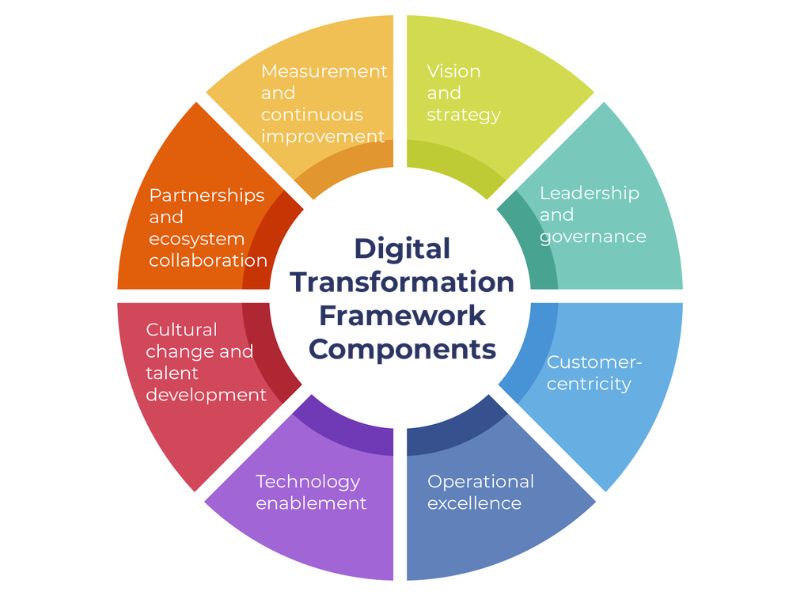
Philosophical Foundations and Epistemological Positioning
Rigorous scholarship requires explicit delineation of the ontological and epistemological assumptions that govern empirical inquiry.
Positivism and Deductive Quantitative Modeling
The positivist paradigm presumes that an objective reality operates independently of human cognition and can be measured through quantifiable metrics. In digital transformation inquiry, positivists adopt deductive logic, deriving directional hypotheses from foundational paradigms such as the Technology Acceptance Model (TAM), the Technology-Organization-Environment (TOE) framework, and the Resource-Based View (RBV). Empirical execution relies on multi-item Likert survey instruments administered across broad enterprise cross-sections, with variance-based or covariance-based structural equation modeling evaluating hypothesized structural relationships.
Interpretivism and Inductive Qualitative Inquiry
Conversely, the interpretivist paradigm posits that social reality is socially constructed through human interactions and cognitive sensemaking. In-depth case studies, longitudinal ethnographic observations, and semi-structured executive interviews enable researchers to capture the socio-technical complexities, political resistance, and emergent cultural dynamics that unfold during digital restructuring within single enterprise environments.
Pragmatism and Mixed-Methods Integration
Because enterprise digital transformation represents a complex socio-technical phenomenon bridging physical IT infrastructure with human behavioral dynamics, pragmatism offers an optimal philosophical foundation. Pragmatist researchers prioritize solving practical research problems by integrating qualitative exploratory field inquiries (to contextualize measurement scales and refine boundary conditions) with quantitative confirmatory surveys (to statistically validate structural path models across broad organizational populations).
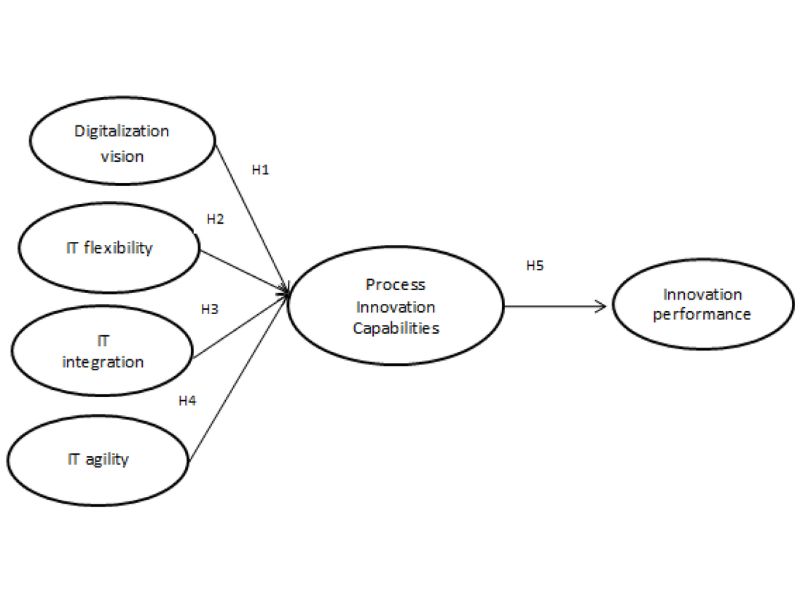
Sequential Mixed-Methods Research Architectures
To maximize construct validity and contextual nuance, scholars frequently deploy a sequential mixed-methods design structured into three procedural phases:
- Phase 1: Qualitative Exploration and Contextual Adaptation: Conducting semi-structured interviews with 15 to 20 Chief Information Officers (CIOs) and enterprise executives. This phase refines established foreign measurement scales to match regional institutional norms, eliminates lexical ambiguity, and identifies potential industry-specific moderating mechanisms.
- Phase 2: Confirmatory Quantitative Cross-Sectional Survey: Administering the operationalized survey instrument to a representative sample of enterprise decision-makers; conducting statistical screening, assessing common method variance, and testing the measurement and structural models via PLS-SEM.
- Phase 3: Post-Hoc Qualitative Triangulation: Convening executive focus groups or conducting follow-up case analyses to interpret non-significant structural paths, suppressive mediating effects, or counter-intuitive empirical findings emerging from statistical estimation.
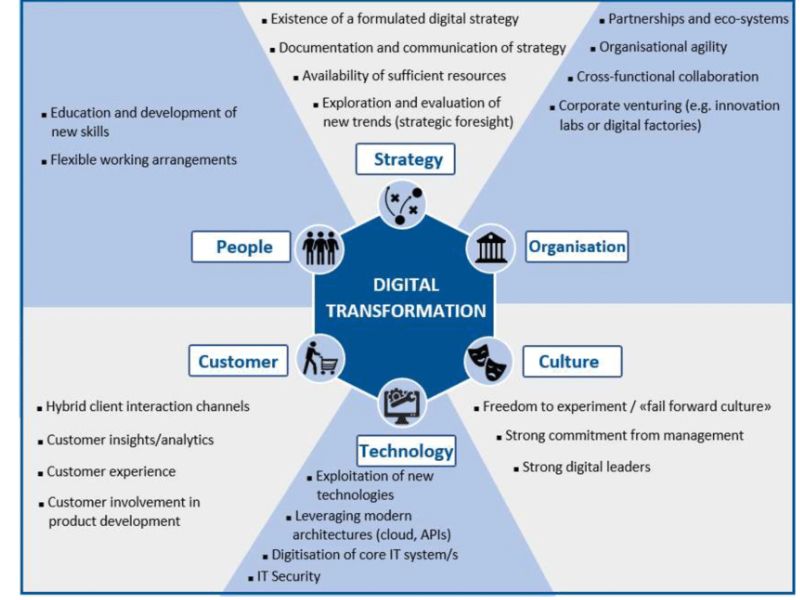
Sampling Architecture and Informant Selection Protocols
Flawed sampling architectures severely compromise statistical inference and representational generalizability.
Aligning the Unit of Analysis with Theoretical Constructs
A frequent error in technology adoption research is the confounding of individual and organizational units of analysis. When investigating enterprise-level digital maturity, technological capabilities, or financial performance, the firm constitutes the unit of analysis. Consequently, respondents must be designated “key informants”—individuals with overarching strategic visibility, such as CEOs, CIOs, CTOs, or Chief Digital Officers (CDOs). Conversely, when investigating user interface ergonomics, perceived cognitive load, or employee digital fatigue, the individual employee represents the appropriate unit of analysis.
Sample Size Determination via Statistical Power Analysis
Contemporary quantitative standards reject heuristic guidelines such as the historical “10-times rule”. Scholars must calculate minimum sample size requirements using statistical power analysis software (e.g., G*Power). Assuming an alpha level α = 0.05, statistical power of 0.80, and an anticipated medium effect size (f² = 0.15) for structural models with 5 to 8 direct predictors, the minimum statistical threshold requires 150 to 220 valid observations. To buffer against survey non-response and careless responding (straight-lining), researchers should distribute between 350 and 500 questionnaires.
Statistical Verification Standards via PLS-SEM
Partial Least Squares Structural Equation Modeling represents the dominant analytical tool in contemporary technology management research due to its superior capabilities in handling complex hierarchical models, composite constructs, and non-normally distributed behavioral data (Hair et al., 2022).
Reflective Measurement Model Evaluation
Before assessing hypothesized structural paths, the reflective measurement model must satisfy strict psychometric benchmarks:
- Indicator Reliability: Outer factor loadings (λ) should equal or exceed 0.708, ensuring that the latent construct captures at least 50% of indicator variance (λ² ≥ 0.50).
- Internal Consistency: Cronbach’s Alpha (CA) and Composite Reliability (CR / rho_C, rho_A) must fall within the 0.70 to 0.95 range. Values exceeding 0.95 signal potential indicator redundancy.
- Convergent Validity: Average Variance Extracted (AVE) must satisfy AVE ≥ 0.50 across all latent constructs.
- Discriminant Validity: The Heterotrait-Monotrait Ratio of Correlations (HTMT) must be strictly below 0.85 (conservative) or 0.90 (liberal), complemented by the classical Fornell-Larcker criterion.
Structural Model Evaluation and Predictive Power
Upon establishing measurement validity, structural path parameters are estimated:
- Collinearity Assessment: Predictor construct Variance Inflation Factors (VIF) must remain strictly below 3.0 to rule out structural collinearity.
- Path Significance and Bootstrapping: Standardized path coefficients (β) and t-statistics are calculated via non-parametric bootstrapping with 5,000 or 10,000 resamples.
- Explanatory and Predictive Power: Documenting the coefficient of determination (R²), effect sizes (f²), and executing PLSpredict to assess out-of-sample predictive performance (Q² predict).
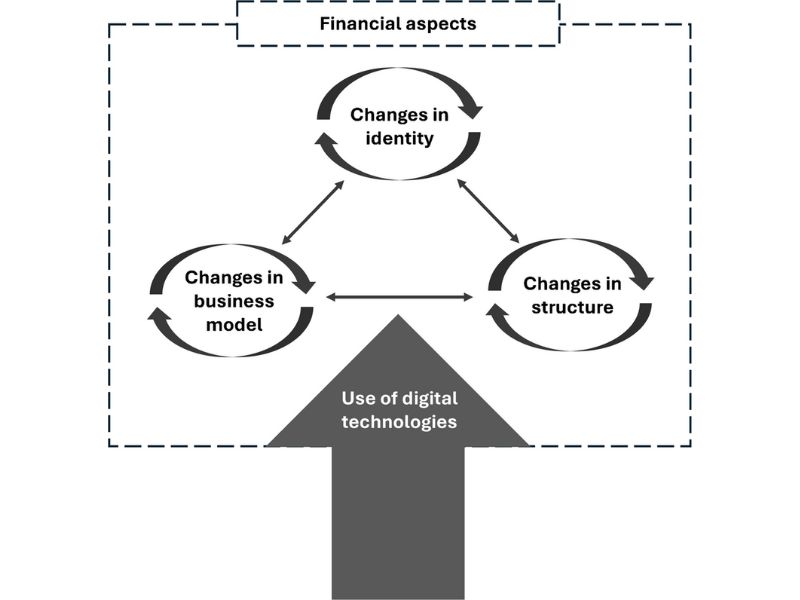
Frequently Asked Questions (FAQ)
1. How should researchers address Common Method Bias (CMB) when collecting single-informant survey data?
Scholars must implement procedural countermeasures during instrument design (assuring complete respondent confidentiality, separating independent and dependent variable scales, counterbalancing question sequences) and report statistical diagnostics. Statistically, authors must document Harman’s single-factor test (confirming the first factor accounts for less than 50% of variance) and assess full collinearity VIFs in PLS-SEM (confirming all latent construct VIF values remain strictly below 3.3).
2. Can cross-sectional survey designs establish definitive causality in digital transformation research?
Strictly speaking, cross-sectional surveys identify statistical associations and covariances rather than definitive temporal causality. To substantiate causal inference, scholars should employ longitudinal panel surveys (measuring technology antecedents at Time 1 and enterprise performance outcomes at Time 2), multi-source dyadic designs (collecting technical infrastructure metrics from CIOs and performance metrics from CFOs), or triangulate survey models with objective corporate financial disclosures.
3. What are the key differences between PLS-SEM and CB-SEM in information systems methodology?
Covariance-Based SEM (CB-SEM, e.g., via AMOS or LISREL) aims to minimize the difference between sample and theoretical covariance matrices, making it ideal for testing and confirming established theories under multivariate normality assumptions. In contrast, PLS-SEM is a variance-based, prediction-oriented approach designed to maximize the explained variance of endogenous constructs (R²), functioning effectively with complex structural models, non-normal data distributions, and composite measurement models.
Conclusion and Academic Implications
Establishing an immaculate digital transformation research methodology ensures that empirical findings contribute meaningfully to cumulative scientific knowledge. By aligning epistemological foundations with sequential mixed-methods designs, executing robust statistical power analyses, controlling for common method variance, and applying state-of-the-art PLS-SEM evaluation standards, researchers can produce high-impact scholarly contributions suitable for publication in leading international journals. Recent empirical contributions by Nguyen Thanh Phuong illustrate the execution of rigorous quantitative methodologies in evaluating technology assimilation across industrial enterprises in emerging markets.
Scholars and graduate researchers developing survey questionnaires and structural equation models on technology adoption are invited to examine and cite the empirical investigation conducted in Binh Duong at DOI: https://doi.org/10.67916/ptbvv.2026.1.730.
Standard academic reference formats across five international guidelines are provided below:
| Citation Style | English Reference Format | Vietnamese Reference Format |
|---|---|---|
| APA 7 | Nguyen, T. P., Vo, X. V., & Huynh, T. P. D. (2026). Determinants of digital transformation in small and medium-sized enterprises: A study in the former Binh Duong Province. Phát triển bền vững Vùng, 16(1), 110–123. https://doi.org/10.67916/ptbvv.2026.1.730 | Nguyễn, T. P., Võ, X. V., & Huỳnh, T. P. D. (2026). Các yếu tố ảnh hưởng đến chuyển đổi số tại các doanh nghiệp nhỏ và vừa: Nghiên cứu trên địa bàn Bình Dương (cũ). Phát triển bền vững Vùng, 16(1), 110–123. https://doi.org/10.67916/ptbvv.2026.1.730 |
| Harvard | Nguyen, T.P., Vo, X.V. and Huynh, T.P.D. (2026) ‘Determinants of digital transformation in small and medium-sized enterprises: A study in the former Binh Duong Province’, Phát triển bền vững Vùng, 16(1), pp. 110–123. doi:10.67916/ptbvv.2026.1.730. | Nguyễn, T.P., Võ, X.V. và Huỳnh, T.P.D. (2026) ‘Các yếu tố ảnh hưởng đến chuyển đổi số tại các doanh nghiệp nhỏ và vừa: Nghiên cứu trên địa bàn Bình Dương (cũ)’, Phát triển bền vững Vùng, 16(1), tr. 110–123. doi:10.67916/ptbvv.2026.1.730. |
| MLA 9 | Nguyen, Thanh Phuong, et al. “Determinants of Digital Transformation in Small and Medium-Sized Enterprises: A Study in the Former Binh Duong Province.” Phát triển bền vững Vùng, vol. 16, no. 1, 2026, pp. 110–123. doi:10.67916/ptbvv.2026.1.730. | Nguyễn Thanh Phương, Võ Xuân Vinh, và Huỳnh Thị Phương Dung. “Các yếu tố ảnh hưởng đến chuyển đổi số tại các doanh nghiệp nhỏ và vừa: Nghiên cứu trên địa bàn Bình Dương (cũ).” Phát triển bền vững Vùng, quyển 16, số 1, 2026, tr. 110–123. doi:10.67916/ptbvv.2026.1.730. |
| Chicago (Author-Date) | Nguyen, Thanh Phuong, Xuan Vinh Vo, and Thi Phuong Dung Huynh. 2026. “Determinants of Digital Transformation in Small and Medium-Sized Enterprises: A Study in the Former Binh Duong Province.” Phát triển bền vững Vùng 16 (1): 110–123. https://doi.org/10.67916/ptbvv.2026.1.730. | Nguyễn Thanh Phương, Võ Xuân Vinh, và Huỳnh Thị Phương Dung. 2026. “Các yếu tố ảnh hưởng đến chuyển đổi số tại các doanh nghiệp nhỏ và vừa: Nghiên cứu trên địa bàn Bình Dương (cũ).” Phát triển bền vững Vùng 16 (1): 110–123. https://doi.org/10.67916/ptbvv.2026.1.730. |
| IEEE | [1] T. P. Nguyen, X. V. Vo, and T. P. D. Huynh, “Determinants of digital transformation in small and medium-sized enterprises: A study in the former Binh Duong Province,” Phát triển bền vững Vùng, vol. 16, no. 1, pp. 110–123, 2026, doi: 10.67916/ptbvv.2026.1.730. | [1] N. T. Phương, V. X. Vinh và H. T. P. Dung, “Các yếu tố ảnh hưởng đến chuyển đổi số tại các doanh nghiệp nhỏ và vừa: Nghiên cứu trên địa bàn Bình Dương (cũ),” Phát triển bền vững Vùng, quyển 16, số 1, tr. 110–123, 2026, doi: 10.67916/ptbvv.2026.1.730. |

Giảng viên Nguyễn Thanh Phương là chuyên gia chuyên sâu về Nghiên cứu khoa học, Ứng dụng AI, Digital Marketing và Quản trị bản thân. Với kinh nghiệm giảng dạy thực chiến, tác giả trực tiếp hướng dẫn ứng dụng phương pháp luận và phân tích dữ liệu chuyên sâu cho người học nên được sinh viên gọi là Thầy giáo quốc dân. Mọi nội dung chia sẻ đều tuân thủ nguyên tắc khách quan, thực chứng và mang giá trị ứng dụng cao, hướng tới mục tiêu cốt lõi: “Làm bạn tốt hơn!