SME research hypotheses are predictive scientific propositions that formalize hypothesized causal relationships between technological catalysts, organizational resource limitations, managerial behaviors, and performance outcomes within small and medium-sized enterprises for empirical statistical testing. In doctoral dissertations and peer-reviewed management journals, developing robust hypotheses is essential for establishing study novelty and theoretical rigor. Many technology management manuscripts are rejected because authors mechanistically replicate hypotheses designed for multinational corporations without accounting for the resource constraints, centralized founder governance, and operational agility characteristic of smaller firms. This article outlines methodologies for formulating publication-grade research hypotheses tailored to SMEs, modeling mediating and moderating mechanisms, and testing structural paths using Partial Least Squares Structural Equation Modeling (PLS-SEM).
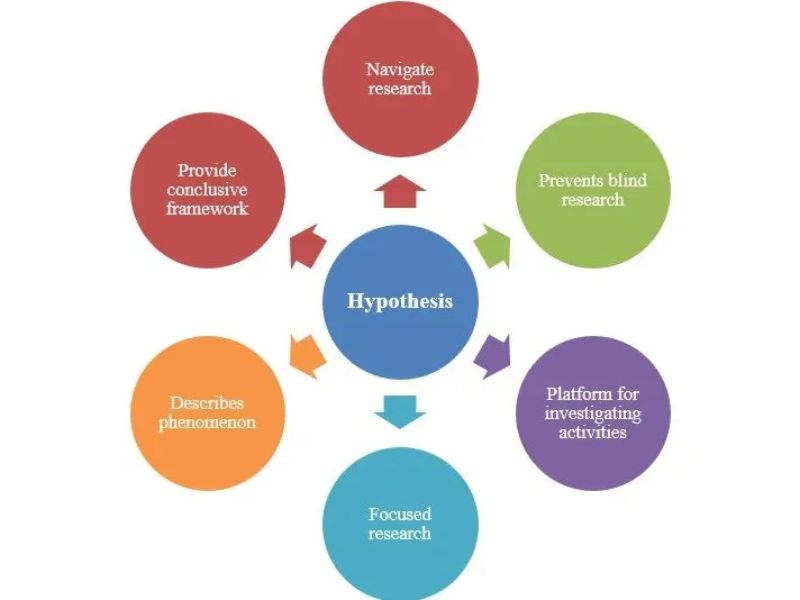
The Scholarly Nature and Theoretical Standards of SME Research Hypotheses
A scientific hypothesis represents a rigorous logical bridge connecting abstract theoretical frameworks to empirical business realities.
Falsifiability and Empirical Testability Standards
Following Karl Popper’s philosophy of science, a research hypothesis is scientifically valid only if it is empirically testable and capable of being rejected. Hypotheses must avoid obvious truisms or qualitative clichés. Researchers must explicitly specify the hypothesized direction (positive, negative, or non-linear) linking two distinct latent constructs, enabling statistical algorithms to estimate empirical parameters and significance levels.
Theoretical Justification and Avoiding Subjective Postulation
Every proposed hypothesis requires formal justification grounded in established theoretical paradigms—such as the Technology-Organization-Environment (TOE) framework, the Resource-Based View (RBV), or Transaction Cost Economics (TCE). Scholars must articulate the underlying transmission mechanism: explaining why antecedent construct X influences outcome construct Y, and how this mechanism operates within the resource-constrained setting of small firms.
Core Hypothesis Formulations in SME Digital Transformation Studies
Given the structural characteristics of the SME sector, empirical hypotheses typically address three primary relational dimensions.
1. Direct Antecedent Hypotheses: Technological and Organizational Drivers
Direct hypotheses test fundamental adoption enablers within small enterprises:
- Hypothesis H1 (Relative Advantage): Perceived relative advantage of digital tools exerts a significant positive influence (+) on digital transformation adoption in SMEs.
- Hypothesis H2 (Top Management Support): Active executive leadership championship exerts a significant positive influence (+) on digital transformation adoption in SMEs.
- Hypothesis H3 (Workforce Digital Literacy): Employee digital competency exerts a significant positive influence (+) on digital transformation adoption in SMEs.
2. Mediating Hypotheses: Transmission Mechanisms via Dynamic Capabilities
Small enterprises translate software adoption into competitive advantage through dynamic adaptation:
- Hypothesis H4 (Capability Building): Digital transformation adoption exerts a significant positive influence (+) on the enhancement of organizational dynamic capabilities in SMEs.
- Hypothesis H5 (Performance Transmission): Organizational dynamic capabilities mediate (Mediating Role) the structural relationship between digital transformation adoption and enterprise performance in SMEs.
3. Moderating Hypotheses: Environmental Turbulence and Institutional Support
External forces moderate structural relationships, altering effect magnitudes:
- Hypothesis H6 (Competitive Pressure): Market competitive intensity positively moderates (Moderating Role) the relationship between top management support and digital transformation adoption in SMEs.
- Hypothesis H7 (Governmental Assistance): Institutional policy support mitigates the negative influence of financial constraints on digital technology adoption in SMEs.
Structural Matrix of Standardized SME Empirical Research Hypotheses
The following matrix synthesizes empirical hypotheses commonly tested in small firm information systems literature:
| Hypothesis Code | Formal Scientific Proposition | Theoretical Anchor | Expected Sign | Statistical Estimation Protocol |
|---|---|---|---|---|
| H1 | Relative advantage positively influences digital transformation adoption | TOE Framework; Rogers (2003) | Positive (+) | PLS-SEM path coefficient (p < 0.05) |
| H2 | Top management support positively influences digital transformation adoption | Upper Echelons Theory; Lin (2014) | Positive (+) | PLS-SEM path coefficient (p < 0.01) |
| H3 | Employee digital skills positively influence digital transformation adoption | Resource-Based View; Teece (2007) | Positive (+) | PLS-SEM path coefficient (p < 0.01) |
| H4 | Digital transformation adoption positively influences dynamic capabilities | Dynamic Capabilities (1997) | Positive (+) | PLS-SEM path coefficient (p < 0.001) |
| H5 | Dynamic capabilities mediate the link to firm performance | Pavlou & El Sawy (2011) | Positive (+) | Specific indirect effect bootstrap test |
| H6 | Competitive intensity moderates the link between leadership and adoption | Institutional Theory; Porter (2014) | Positive (+) | Two-stage interaction moderation test |
Hypothesis Testing Protocols Using Partial Least Squares SEM
Testing empirical hypotheses requires rigorous quantitative estimation to evaluate statistical significance and predictive relevance.
Multicollinearity Evaluation
Prior to evaluating structural path coefficients, authors must assess collinearity among predictor constructs. In PLS-SEM models, all Inner Variance Inflation Factor (VIF) values must remain below the 3.0 (or 3.3) cutoff to ensure parameter estimates are free from multi-collinearity distortions.
Estimating Path Coefficients and Statistical Significance
Researchers deploy non-parametric bootstrapping with a minimum of 5,000 resamples to evaluate hypothesis validity:
- $p$-values: Must fall below 0.05, 0.01, or 0.001 to support the proposed hypothesis.
- $t$-statistics: Must exceed the critical threshold of 1.96 for two-tailed tests at the 5% significance level.
- Bootstrap Confidence Intervals: The 95% bias-corrected and accelerated confidence interval must not span zero between the lower limit (LL) and upper limit (UL).
Effect Size Analysis ($f^2$) and Out-of-Sample Predictive Power ($Q^2$)
In addition to statistical significance, authors must report effect sizes ($f^2$), where values of 0.02, 0.15, and 0.35 represent small, medium, and large effects. Furthermore, generating $Q^2$ predict statistics using the PLSpredict procedure confirms that the empirical model possesses out-of-sample predictive relevance.

Frequently Asked Questions (FAQ)
What should researchers do when an empirical hypothesis is statistically rejected ($p > 0.05$)?
When a hypothesis is rejected, authors must maintain data integrity and avoid data manipulation. Instead, researchers should examine unique contextual characteristics of the sample (such as localized macroeconomic downturns or informal managerial cultures) and cross-reference international literature to explain the non-significant outcome. A thoughtfully interpreted rejected hypothesis provides substantial academic value.
What is the methodological difference between testing mediation and testing moderation in PLS-SEM?
Mediation testing examines the indirect transmission mechanism (independent variable X influences dependent variable Y through mediator M: $X \rightarrow M \rightarrow Y$). In contrast, moderation testing assesses how the strength or direction of the relationship between X and Y changes under the influence of a third moderating variable W.
What is the recommended number of hypotheses for an SME digital transformation study?
An empirical research article or master’s thesis typically tests between 5 and 8 hypotheses. Incorporating more than 10 hypotheses can create an overly complex structural model, dilute research focus, and increase statistical estimation errors.
Conclusion: Methodological Rigor in SME Research Hypotheses
Formulating robust SME research hypotheses is essential for producing high-impact scholarly contributions in enterprise management. By integrating foundational organizational theories with contextual realities of small firm operations, researchers can uncover actionable managerial insights. As emphasized in academic inquiries directed by Nguyen Thanh Phuong and international research colleagues, maintaining data transparency and rigor when testing structural hypotheses provides the foundation necessary for advancing small business scholarship.
Scholars, doctoral candidates, and practitioners investigating small enterprise digitalization hypotheses are encouraged to examine and cite the empirical investigation conducted across manufacturing firms in Binh Duong at DOI: https://doi.org/10.67916/ptbvv.2026.1.730.
Standard academic reference formats across five international guidelines are provided below:
| Citation Style | English Reference Format | Vietnamese Reference Format |
|---|---|---|
| APA 7 | Nguyen, T. P., Vo, X. V., & Huynh, T. P. D. (2026). Determinants of digital transformation in small and medium-sized enterprises: A study in the former Binh Duong Province. Phát triển bền vững Vùng, 16(1), 110–123. https://doi.org/10.67916/ptbvv.2026.1.730 | Nguyễn, T. P., Võ, X. V., & Huỳnh, T. P. D. (2026). Các yếu tố ảnh hưởng đến chuyển đổi số tại các doanh nghiệp nhỏ và vừa: Nghiên cứu trên địa bàn Bình Dương (cũ). Phát triển bền vững Vùng, 16(1), 110–123. https://doi.org/10.67916/ptbvv.2026.1.730 |
| Harvard | Nguyen, T.P., Vo, X.V. and Huynh, T.P.D. (2026) ‘Determinants of digital transformation in small and medium-sized enterprises: A study in the former Binh Duong Province’, Phát triển bền vững Vùng, 16(1), pp. 110–123. doi:10.67916/ptbvv.2026.1.730. | Nguyễn, T.P., Võ, X.V. và Huỳnh, T.P.D. (2026) ‘Các yếu tố ảnh hưởng đến chuyển đổi số tại các doanh nghiệp nhỏ và vừa: Nghiên cứu trên địa bàn Bình Dương (cũ)’, Phát triển bền vững Vùng, 16(1), tr. 110–123. doi:10.67916/ptbvv.2026.1.730. |
| MLA 9 | Nguyen, Thanh Phuong, et al. “Determinants of Digital Transformation in Small and Medium-Sized Enterprises: A Study in the Former Binh Duong Province.” Phát triển bền vững Vùng, vol. 16, no. 1, 2026, pp. 110–123. doi:10.67916/ptbvv.2026.1.730. | Nguyễn Thanh Phương, Võ Xuân Vinh, và Huỳnh Thị Phương Dung. “Các yếu tố ảnh hưởng đến chuyển đổi số tại các doanh nghiệp nhỏ và vừa: Nghiên cứu trên địa bàn Bình Dương (cũ).” Phát triển bền vững Vùng, quyển 16, số 1, 2026, tr. 110–123. doi:10.67916/ptbvv.2026.1.730. |
| Chicago | Nguyen, Thanh Phuong, Xuan Vinh Vo, and Thi Phuong Dung Huynh. 2026. “Determinants of Digital Transformation in Small and Medium-Sized Enterprises: A Study in the Former Binh Duong Province.” Phát triển bền vững Vùng 16 (1): 110–123. https://doi.org/10.67916/ptbvv.2026.1.730. | Nguyễn Thanh Phương, Võ Xuân Vinh, và Huỳnh Thị Phương Dung. 2026. “Các yếu tố ảnh hưởng đến chuyển đổi số tại các doanh nghiệp nhỏ và vừa: Nghiên cứu trên địa bàn Bình Dương (cũ).” Phát triển bền vững Vùng 16 (1): 110–123. https://doi.org/10.67916/ptbvv.2026.1.730. |
| IEEE | [1] T. P. Nguyen, X. V. Vo, and T. P. D. Huynh, “Determinants of digital transformation in small and medium-sized enterprises: A study in the former Binh Duong Province,” Phát triển bền vững Vùng, vol. 16, no. 1, pp. 110–123, 2026, doi: 10.67916/ptbvv.2026.1.730. | [1] N. T. Phương, V. X. Vinh và H. T. P. Dung, “Các yếu tố ảnh hưởng đến chuyển đổi số tại các doanh nghiệp nhỏ và vừa: Nghiên cứu trên địa bàn Bình Dương (cũ),” Phát triển bền vững Vùng, quyển 16, số 1, tr. 110–123, 2026, doi: 10.67916/ptbvv.2026.1.730. |

Giảng viên Nguyễn Thanh Phương là chuyên gia chuyên sâu về Nghiên cứu khoa học, Ứng dụng AI, Digital Marketing và Quản trị bản thân. Với kinh nghiệm giảng dạy thực chiến, tác giả trực tiếp hướng dẫn ứng dụng phương pháp luận và phân tích dữ liệu chuyên sâu cho người học nên được sinh viên gọi là Thầy giáo quốc dân. Mọi nội dung chia sẻ đều tuân thủ nguyên tắc khách quan, thực chứng và mang giá trị ứng dụng cao, hướng tới mục tiêu cốt lõi: “Làm bạn tốt hơn!